Buying gadgets in 2023 was not just about choosing the newest phone or the flashiest accessory. Tech had spread into almost every part of daily life: work, fitness, gaming, travel, home security, entertainment, file storage, and personal organization. CES 2023 showed how wide the gadget world had become, with major attention on digital health, mobility, sustainability, connected devices, and new forms of entertainment.
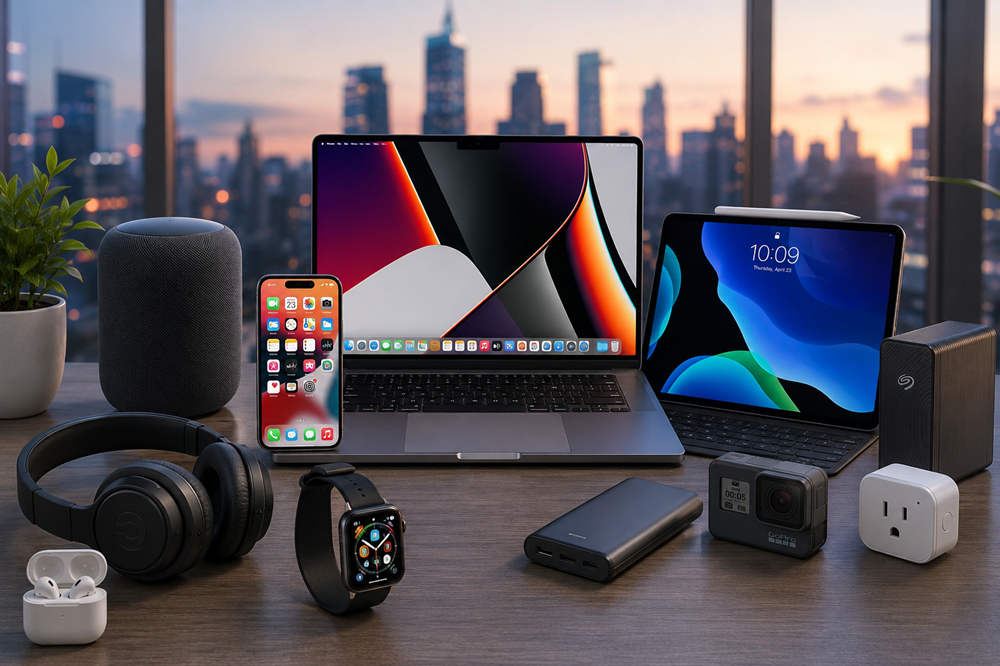
A ZardGadjet buyer guide on 2023 gadgets brings many of those everyday tech categories together, including smartphones, laptops, tablets, smartwatches, gaming gear, audio devices, smart home tools, power banks, and external storage. The useful way to read that kind of checklist is not to buy everything on it. It is to decide which devices actually solve a problem in your own routine.
This guide breaks those categories down in a practical way, so you can tell the difference between gadgets most people rely on, gadgets that are useful for certain lifestyles, and gadgets that are only worth buying if they fit a specific need.
How to Read the Guide: Essential, Useful, and Optional Gadgets
The easiest way to avoid overbuying is to divide gadgets into three groups: essential, useful, and optional.
Essential gadgets are the devices most people rely on almost every day. A dependable smartphone usually belongs here. For many people, a laptop or tablet does too, especially for work, school, banking, video calls, writing, research, and managing daily tasks.
Useful gadgets are not required for everyone, but they can make daily life smoother. Wireless earbuds, smartwatches, power banks, smart speakers, and external SSDs fit this group. They are valuable when they support a real habit, such as commuting, exercising, traveling, studying, gaming, or creating content.
Optional gadgets depend more heavily on lifestyle. Gaming headsets, VR gear, advanced smart home devices, creator tools, compact projectors, and travel accessories may be excellent purchases for some people. For others, they may become clutter.
| Gadget Category | Best For | How Necessary Is It? |
|---|---|---|
| Smartphone | Daily communication, photos, apps, payments, travel, smart home control | Essential for most people |
| Laptop or tablet | Work, study, projects, browsing, entertainment | Essential or very useful |
| Wireless earbuds or headphones | Calls, focus, music, travel, workouts, gaming | Useful for most people |
| Power bank | Backup power during travel, school, work, and emergencies | Very useful |
| Smartwatch or fitness tracker | Health tracking, workouts, sleep, notifications | Useful depending on habits |
| Gaming gear | Better play, comfort, audio, and control | Optional unless you game often |
| Smart home devices | Lighting, security, automation, cleaning, energy control | Useful when solving a home problem |
| External storage | Backups, large files, photos, videos, games | Useful for students, creators, gamers, and workers |
Smartphones: The Core Device in the List
The smartphone sits at the center of most tech setups. In 2023, it was still the device people used for calls, messages, photos, maps, banking, shopping, entertainment, video calls, mobile payments, travel documents, and smart home apps.
It also acted as the control point for other gadgets. Earbuds paired with it. Smartwatches synced to it. Power banks kept it running. Smart home devices were managed through it. Photos and videos often started on the phone before moving to cloud storage or an external drive.
That is why a good smartphone mattered more than many smaller accessories. A phone with weak battery life, poor storage, slow performance, or outdated software could make the rest of your setup feel frustrating.
For most buyers, the practical features were simple: long battery life, enough storage, a good camera, strong security, fast charging, reliable performance, and software support. The best phone was not always the most expensive one. It was the one that stayed dependable throughout the day.
Laptops and Tablets: Productivity Gadgets for Work, Study, and Everyday Use
Laptops and tablets became even more important as work, school, and personal projects moved across different spaces. People were working from home, studying online, editing videos, joining meetings, managing side projects, and using portable screens for entertainment.
A laptop was the stronger choice for full productivity. It made sense for writing, spreadsheets, research, coding, editing, meetings, and multitasking. A tablet worked better for reading, note-taking, sketching, streaming, casual browsing, and lightweight travel.
Not everyone needed both. A student might get more value from a tablet with a stylus. A remote worker might need a laptop with a better keyboard, webcam, battery, and display. A creator might use a laptop for editing and a tablet for drawing or reviewing work.
Accessories could also improve a setup without requiring a full upgrade. A keyboard case, stylus, laptop stand, wireless mouse, docking station, or portable monitor could make an existing device more comfortable and flexible.
Smartwatches and Fitness Trackers: Helpful, But Not Essential for Everyone
Smartwatches and fitness trackers were useful because they brought small but helpful information to the wrist. They could track steps, workouts, sleep, heart rate, timers, reminders, notifications, and sometimes calls or contactless payments.
For someone trying to move more, sleep better, or stay consistent with workouts, a wearable could be a good investment. It made progress visible and reminders harder to ignore. For someone who only wanted basic health tracking, a simple fitness band was often enough.
A full smartwatch made more sense for people who wanted deeper phone integration. That could include replying to messages, controlling music, using GPS, checking notifications, or paying without pulling out a phone.
The downside is that wearables can become another source of distraction. A watch that constantly buzzes may not make life better. The best wearable is one that supports your habits without demanding too much attention.
Gaming Gadgets: Important for Gamers, Optional for Everyone Else
Gaming gear belongs in this kind of gadget guide because gaming is one of the biggest reasons people buy extra tech. But this category should be read honestly. Gaming gadgets are important for gamers, not for everyone.
A good gaming headset can improve sound, voice chat, and immersion. A better controller can make long sessions more comfortable. A mechanical keyboard and gaming mouse can help PC players who want faster response and more control. A high-refresh monitor can make competitive games feel smoother. A handheld gaming device can be useful for people who want to play away from a desk or TV.
VR headsets and capture cards are more specific. VR is best for people who enjoy immersive games and have enough space to use it comfortably. Capture cards are useful for streamers and creators, but unnecessary for casual players.
The right gaming gadget depends on the games you play, the platform you use, and how often you play. Fancy lighting and oversized gear do not matter much if the device does not improve comfort, control, or performance.
Audio Gadgets: Earbuds and Headphones for Calls, Focus, and Travel
Wireless earbuds and headphones became everyday tools because they fit into so many parts of life. People used them for music, podcasts, workouts, video calls, gaming, studying, commuting, and travel.
For many buyers, noise cancellation was the feature that made the biggest difference. It helped reduce distractions in offices, coffee shops, airplanes, trains, and busy homes. For remote workers and students, microphone quality was just as important because clear audio made calls and meetings easier.
Earbuds were best for portability. They were easy to keep in a pocket, gym bag, backpack, or desk drawer. Over-ear headphones were better for long sessions, stronger noise cancellation, and comfort during flights or focused work.
The smartest choice depends on where you use them most. Travelers should care about comfort and noise cancellation. Remote workers should care about microphone quality. Gym users should care about fit and water resistance. Gamers should care about latency and voice clarity.
Smart Home Gadgets: Start Small Before Building a Full Setup
Smart home gadgets were popular in 2023, but the most useful ones were often the simplest. A smart plug could automate a lamp, fan, or coffee maker. A smart bulb could dim lights or create routines. A video doorbell could help with deliveries. A security camera could add peace of mind. A robot vacuum could save time in the right home layout.
Compatibility also mattered more than ever. Smart home standards such as Matter continued expanding in 2023, adding support for more device types and showing how important cross-platform control had become.
The mistake many buyers made was trying to build a full smart home too quickly. Too many devices, too many apps, and poor compatibility could turn convenience into frustration.
A better approach is to start with one problem. If you forget to turn off lights, try smart bulbs or plugs. If packages often arrive when you are away, consider a video doorbell. If cleaning floors takes too much time, a robot vacuum may help. If your home temperature is hard to manage, a smart thermostat may be useful.
Smart home gadgets should make the home easier to manage. If a device adds more setup, more alerts, and more confusion than value, it is not a smart purchase.
Power Banks and Chargers: The Most Practical Everyday Accessories
A power bank is not the most exciting gadget, but it is one of the easiest to justify. Phones, earbuds, tablets, cameras, handheld consoles, and travel accessories all depend on battery life. When a battery dies at the wrong time, the whole day can become more stressful.
A compact power bank helped during school days, commutes, road trips, flights, festivals, meetings, and emergencies. For most people, a medium-capacity model offered the best balance between size and usefulness. Smaller models were easier to carry, while larger models could charge more devices but added weight.
Chargers mattered too. A good USB-C charger, multi-port adapter, wireless charging pad, or travel adapter could simplify a desk, nightstand, or travel bag. The goal was not to collect chargers. It was to keep the devices you already use ready when you need them.
This is one category where practicality beats hype. A reliable charger will usually get more use than a trendy gadget that only solves a rare problem.
External Storage: The Overlooked Gadget Category
External storage is easy to ignore until something goes wrong. Photos, videos, school files, work documents, downloads, game data, and creative projects can fill up a device faster than expected. A good backup can also protect important files if a phone, laptop, or tablet fails.
An external SSD was especially useful for students, photographers, video editors, gamers, remote workers, and anyone handling large files. SSDs were usually faster, smaller, and easier to carry than older external hard drives. Flash drives and memory cards still had a place for quick transfers and device-specific storage.
Cloud storage helped too, but it was not a perfect replacement for physical storage. Large uploads could take time, internet access was not always reliable, and some people preferred keeping important files offline as a backup.
The real value of external storage is not just extra space. It is peace of mind.
Lifestyle Gadgets: Useful Only When They Match Your Routine
Some gadgets only make sense when they match a specific lifestyle. These are not universal essentials, but they can be very useful for the right person.
For frequent travelers, useful gadgets might include a luggage tracker, universal adapter, compact charger, e-reader, portable Wi-Fi device, or noise-canceling headphones. For creators, a tripod, microphone, portable light, gimbal, or external SSD may matter more. For gamers, a better headset, controller, monitor, or keyboard may improve the experience. For someone building a cozy entertainment setup, smart lights, speakers, or a compact projector may be worth considering.
The point is not to buy every lifestyle gadget. The point is to match the device to something you already do often. A travel adapter is essential for international travel, but pointless if you rarely leave the country. A microphone is useful if you record videos or join calls often, but unnecessary if you barely create content.
A gadget becomes valuable when it supports a real habit.
The Main Problem With “Must-Have Gadget” Lists
Must-have gadget lists can make too many products sound necessary. That is where buyers need to slow down. A device can be popular, well-reviewed, and beautifully designed without being right for your life.
The biggest challenges are cost, compatibility, fast upgrades, duplicate devices, and overbuying. A tablet may overlap with a laptop. A smartwatch may repeat phone notifications. A smart speaker may go unused if you do not like voice commands. A creator kit may not help if you have not figured out whether your real issue is lighting, audio, storage, or editing.
There is also the problem of short-lived excitement. Many gadgets are fun for the first week and forgotten by the next month. That does not make them bad products, but it does make them poor purchases for people who do not truly need them.
A useful gadget list should help readers buy less, not more. The goal is a better setup, not a crowded drawer full of unused tech.
A Better Way to Decide What You Actually Need
Before buying any gadget, start with the problem you want to solve. That one step makes the decision much clearer.
- Upgrade your phone if your current one is slow, unreliable, out of storage, or no longer supported.
- Buy a laptop or tablet if your work, study, or creative routine feels limited by your current device.
- Choose earbuds or headphones if calls, travel, workouts, music, gaming, or focus time are part of your routine.
- Pick a smartwatch or fitness tracker if you want help with activity, workouts, sleep, or quick notifications.
- Get a power bank if battery life regularly causes stress.
- Add smart home devices only when they solve a specific home problem.
- Buy gaming gear only if it matches how often and where you play.
- Use external storage if your files, photos, videos, or backups are becoming hard to manage.
After that, check the practical details. Does the gadget work with your current phone, laptop, apps, or smart home setup? Is the battery life good enough? Is the warranty reasonable? Does the brand offer software updates? Will you still use it six months from now?
The best gadget is not always the newest one. It is the one that fits smoothly into your routine and continues to feel useful after the excitement fades.
What the Guide Gets Right
The strongest idea in the original checklist is that gadget needs depend on lifestyle. There is no single perfect tech setup for everyone.
A student may need a laptop, tablet, earbuds, and external storage. A gamer may care more about a headset, controller, monitor, and storage. A traveler may need a power bank, adapter, luggage tracker, and noise-canceling headphones. A remote worker may benefit from a laptop stand, headphones, webcam, charger, and portable monitor. A casual user may only need a reliable phone and a few simple accessories.
The checklist also covers the major categories that shaped everyday gadget buying in 2023. It includes core devices, accessories, entertainment gear, productivity tools, smart home products, and backup storage. That makes it a useful starting point for readers who want to think through their tech setup without getting lost in endless product lists.
The strongest takeaway is simple: buy gadgets around your life, not around trends.
Conclusion
The best way to use a ZardGadgets-inspired checklist is as a starting point, not a shopping command. It points to the main gadget categories people cared about in 2023: smartphones, laptops, tablets, smartwatches, gaming accessories, audio devices, smart home tools, power banks, and external storage.
Looking back from 2026, the lesson still holds. Gadgets keep getting smarter, with more AI features, better wearables, more connected homes, and new devices designed to blend into daily routines. But newer does not always mean more necessary. The same buying rule applies now and will matter even more in the future: choose tech that solves a real problem, works with the devices you already own, and stays useful after the first week.
For most people, the essentials are still practical. A reliable phone, a work or study device, good audio, backup power, and enough storage cover the basics. A wearable, gaming accessory, smart home device, travel gadget, or creator tool can be worth adding when it matches a real routine.
Good tech should make life easier, not more cluttered. Whether you are reviewing a 2023 gadget guide, upgrading your setup in 2026, or planning for future devices, the smartest choice is the one that saves time, reduces stress, improves comfort, supports a hobby, or makes everyday tasks smoother.