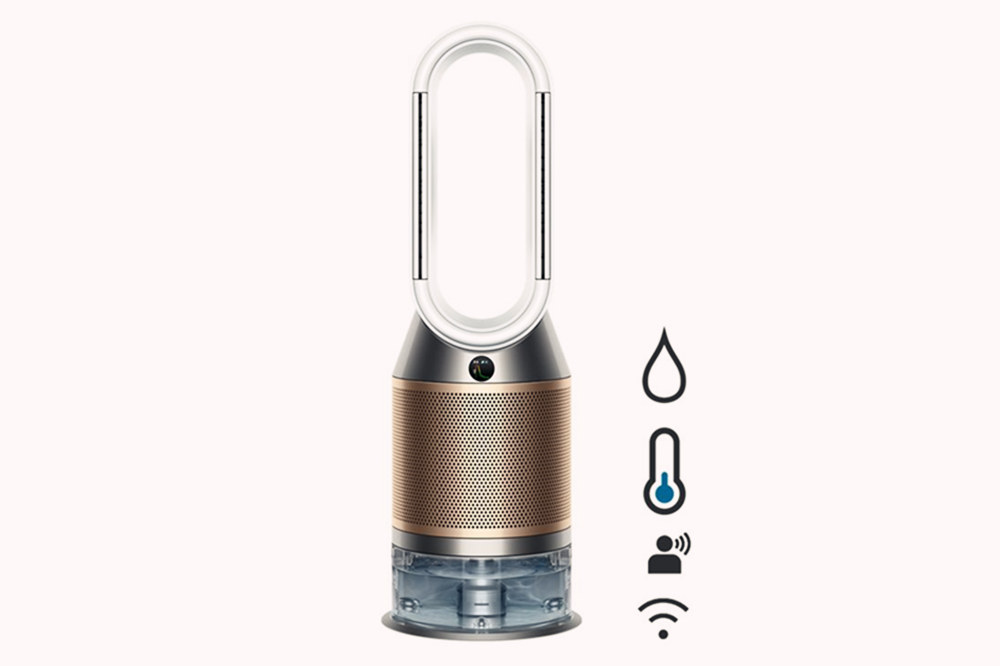
The Dyson Purifier Humidify+Cool Formaldehyde PH04 is a premium indoor air device that combines purification, humidification, fan-style airflow, smart sensing, and formaldehyde-focused filtration. It is not a basic fan, a simple humidifier, or a small budget purifier. It is built for people who want one polished machine to manage several parts of indoor air comfort.
The PH04 is also easy to misunderstand. The “Cool” part refers to projected airflow, not true air conditioning. The formaldehyde feature can be useful, but it does not replace ventilation or removing pollution sources. The best way to understand this machine is to look at what each function does, how much maintenance it needs, and where it fits in a real home.
Availability may also vary. Dyson and some retailers have listed the PH04 as out of stock or no longer available at different times, so buyers should check current listings before assuming it is still easy to buy new.
Quick Specs
| Product name | Dyson Purifier Humidify+Cool Formaldehyde PH04 |
| Main functions | Air purifier, humidifier, and fan-style airflow |
| Filtration | HEPA filtration, activated carbon filtration, and catalytic formaldehyde filtration |
| Formaldehyde feature | Solid-state formaldehyde sensor with catalytic breakdown system |
| Controls | Remote control, MyDyson app, LCD display, and voice-service support |
| Humidifier type | Evaporative humidification with water-system maintenance |
| Cooling type | Airflow only; not refrigerated air conditioning |
| Filter maintenance | Dyson recommends replacing the HEPA + carbon filter about every 12 months or when the machine notifies you |
What Is the Dyson Purifier Humidify+Cool Formaldehyde PH04?
The Dyson PH04 is a three-in-one air-treatment machine. It pulls air through its filtration system, adds humidity when the room is too dry, and projects air back into the room through Dyson’s bladeless-style loop design. Dyson describes the machine as a purifier humidifier that senses pollutants, detects formaldehyde, and projects purified humidified air around the room through its Purifier Humidify+Cool Formaldehyde system.
In daily life, that means the PH04 can sit in a bedroom, home office, living room, or nursery and handle several jobs that might otherwise require separate appliances. It can run as a purifier when air quality changes, add moisture during dry seasons, and move air when the room feels still.
It is not an HVAC system. It does not cool the room like a window AC unit or central air. The airflow may feel cooling on your skin, but the room temperature itself will not drop in the same way it would with air conditioning.
Key Features of the Dyson PH04
The PH04’s main appeal is convenience. It combines several indoor-air features in one machine instead of asking the user to manage a separate air purifier, humidifier, fan, humidity monitor, and air-quality display.
The purifier side uses HEPA and activated carbon filtration. The HEPA filter is designed to capture fine airborne particles, while the carbon filter helps with gases and odors. The formaldehyde system adds a more specialized layer by targeting a specific indoor pollutant that can come from building materials, furniture, adhesives, flooring, and household products.
The humidifier side monitors room humidity and can add moisture automatically. Dyson says the PH04 also treats water before humidifying the room, which matters because humidifiers rely on water tanks and regular moisture output.
The smart features are also central to the experience. The LCD screen shows air-quality and humidity information, while the MyDyson app allows remote control and more detailed settings. Auto mode is one of the most useful features because the machine can respond to air changes without constant manual adjustment.
What Makes the Formaldehyde Feature Different?
Formaldehyde is a common indoor air pollutant. According to the EPA’s formaldehyde indoor air guidance, it can come from building materials, household products, smoking, and unvented fuel-burning appliances. It is also used in manufactured products, which is why new furniture, pressed-wood items, cabinets, flooring, adhesives, and some renovation materials can matter.
This is where the PH04 differs from many ordinary purifiers. Dyson says the machine uses a solid-state sensor to detect formaldehyde and a catalytic filter to break it down into carbon dioxide and water. That is different from simply trapping dust or pollen in a particle filter.
The feature may be especially relevant in newer homes, recently renovated rooms, apartments with new furniture, home offices with composite-wood desks, or rooms where ventilation is limited. It can also appeal to people who want more visibility into indoor air quality instead of guessing what is happening in the room.
Still, a purifier should not be the only strategy. For formaldehyde and other indoor pollutants, source control and ventilation matter. The EPA advises increasing ventilation after bringing new formaldehyde sources into the home and keeping temperature and humidity at moderate levels. A device like the PH04 may help manage indoor air, but it should work alongside good habits, not replace them.
How the Purifier Function Works
The purifier function pulls surrounding air into the base of the machine, passes it through filtration, and sends treated air back into the room. This matters because indoor air pollution is not just one thing. Dust, pollen, pet dander, smoke particles, odors, gases, and volatile organic compounds behave differently.
HEPA filtration is mainly about particles. Activated carbon is used for gases and odors. The formaldehyde-focused system targets one specific gas that standard particle filtration alone is not designed to handle.
Room size and placement affect performance. The PH04 should not be hidden behind a couch, squeezed between furniture, or placed where curtains block airflow. It needs open space around the intake and a clear path to circulate air through the room.
Purification also works best over time. If a room has pets, cooking particles, outdoor air coming in, dust, or new materials releasing gases, the machine needs time to cycle air. Auto mode helps because it can increase output when the sensors detect changes and settle back down when conditions improve.
How the Humidifier Function Works
The humidifier function adds moisture when indoor air is too dry. This can be useful in winter, in dry climates, or in homes where heating and cooling systems make the air feel harsh. Dry air can make a room feel less comfortable and may contribute to dry skin, dry throats, static, and general irritation.
The PH04 measures humidity and can adjust automatically. Instead of running a basic humidifier until the room feels damp, the user can set a target and let the machine manage output more carefully.
That control matters because humidification is not always beneficial. Too much moisture can encourage mold and create a different indoor-air problem. The EPA generally recommends keeping indoor relative humidity between 30% and 50% when possible, and keeping it below 60% to reduce mold risk, according to EPA mold and moisture guidance.
The PH04’s humidifier function is useful, but it also adds responsibility. The tank needs refilling, and the water system needs cleaning. Dyson’s support guidance for purifier humidifiers notes that the machine can prompt users for a deep-clean cycle, which helps remove limescale from the water system. This is normal humidifier ownership, but it is still something buyers should expect.
What the “Cool” Function Actually Means
The “Cool” part of the name can create the wrong expectation. The PH04 is not an air conditioner. It does not use refrigerant, a compressor, or a cooling coil to lower room temperature.
Instead, it works like a fan by projecting air across the room. That airflow can feel cooling when it moves across your skin, especially in mild weather or in a stuffy room. It can also help circulate purified and humidified air more evenly.
This makes the PH04 useful for comfort, but not for serious heat. If the room is hot in the middle of summer, the PH04 may make the air feel more pleasant, but it will not replace an AC unit. Anyone buying it mostly for cooling should understand that difference before spending money.
Everyday Use: What It’s Like to Live With
The PH04 is designed to be used like a connected home appliance. Most people will probably rely on Auto mode during the day, then use quieter settings or Night mode while sleeping.
The LCD display is helpful because it makes the device feel responsive. You can see air-quality and humidity readings without opening the app. The MyDyson app gives more control from across the room and can be useful if the PH04 is in a bedroom, nursery, or office.
Noise depends on fan speed. Lower settings are generally easier to live with during work, sleep, or quiet evenings. Higher settings are more noticeable, especially when the machine is reacting to a sudden change in air quality or trying to move more air through the room.
The water tank is another part of the daily rhythm. If the humidifier is used often, refilling the tank becomes part of ownership. In very dry rooms, the machine may use water more quickly. In rooms with moderate humidity, the humidifier function may run less often.
The all-in-one design is most convenient in rooms where space matters. A single PH04 can look cleaner than a separate fan, purifier, and humidifier lined up around the room. The tradeoff is that one advanced device also has more settings, alerts, and maintenance needs than a simple fan.
Maintenance and Filter Costs
The PH04 is not a set-it-and-forget-it appliance. It has a filter system and a water system, and both need attention.
Dyson recommends replacing the combination HEPA + carbon filter about every 12 months or when the machine notifies the user. Filter life can vary depending on use, air quality, and how often the machine runs, but replacement filters should be considered part of the long-term cost.
The humidifier system also needs regular cleaning. Dyson’s U.K. support page says the monthly deep-clean cycle removes limescale from the water system and that the LCD screen and MyDyson app will let users know when it is time. The process uses citric acid and follows the machine’s guided cleaning steps.
This maintenance is not unusual for a purifier-humidifier, but it should not be ignored. A neglected filter can reduce air-cleaning performance. A neglected humidifier system can become unpleasant and less effective. The PH04 is premium, but it still depends on regular care.
Pros of the Dyson PH04
The biggest advantage of the PH04 is that it combines several useful indoor-air tools in one clean design. For a bedroom, office, or apartment, that can be easier than managing multiple appliances.
The formaldehyde system also gives it a more specific purpose than many standard air purifiers. It is not just focused on visible dust or common allergens; it is also designed around a pollutant that can come from materials already inside the home.
The smart controls are another strength. Auto mode, the LCD display, app control, humidity tracking, and air-quality readings make the machine feel more informative than a basic purifier. You can see what is happening instead of only hearing a fan run.
Independent reviews also highlight real strengths. RTINGS describes the PH04 as a very good option for general home use and notes its app control, water tank capacity, and formaldehyde filtration. Reviewed found that the PH04 performed especially well with VOC and formaldehyde-related testing, which supports the idea that its most unique feature is not just marketing language.
Cons of the Dyson PH04
The first drawback is cost. The PH04 is expensive compared with basic purifiers, humidifiers, and fans. It makes more sense when the buyer will use several of its features, not just one.
The second drawback is cooling expectation. It can move air, but it cannot lower room temperature like an air conditioner. That distinction matters in hot climates or rooms that already need real cooling.
Maintenance is another downside. The filter needs replacement, the water tank needs refilling, and the humidifier system needs cleaning. Anyone who dislikes appliance maintenance may find a simpler air purifier easier to live with.
Independent testing also adds some caution. RTINGS notes that the PH04’s humidifier efficiency is not class-leading and that it may be better suited to bedrooms or offices than large open spaces. Reviewed praised its VOC performance but found its particulate removal less impressive than some dedicated air purifiers. That does not make the PH04 a bad device, but it shows why its best value is the full combination of features rather than one single performance category.
Best Ways to Use the Dyson PH04 at Home
Place the PH04 in a room where people spend a lot of time. Bedrooms, home offices, nurseries, and main living areas are better choices than hallways or rarely used guest rooms.
Keep the machine in an open position. Avoid placing it behind furniture, too close to curtains, or in a tight corner where air cannot move freely. A purifier needs room to pull in air and send treated air back into the space.
Use Auto mode for normal daily operation. This lets the machine respond to changes in air quality and humidity without constant adjustment. It is especially useful during cooking, cleaning, pollen season, dry winter weather, or after adding new furniture to a room.
Set humidity with moderation in mind. Aim for comfort, but avoid making the room damp. The 30% to 50% range is a practical target for many homes, and humidity above 60% should generally be avoided because of moisture and mold concerns.
Keep up with alerts. Replace filters when prompted, refill the tank when needed, and run the deep-clean cycle when the machine asks for it. The PH04 is easiest to live with when maintenance is handled in small steps instead of ignored for months.
Final Thoughts
The Dyson Purifier Humidify+Cool Formaldehyde PH04 is a polished, feature-heavy air-treatment device for people who want more than a basic purifier or humidifier. It combines air purification, humidity control, fan-style airflow, smart controls, real-time air-quality feedback, and formaldehyde-focused filtration in one machine.
Its strongest value is convenience. In the right room, it can reduce appliance clutter and make indoor air conditions easier to monitor. The formaldehyde feature gives it a more specialized purpose, especially in spaces with new furniture, recent renovation materials, or limited ventilation.
Its limits are just as important. It is expensive, it needs maintenance, and it is not a true cooling appliance. It may also be more machine than some households need. But for a smart-home setup where purification, humidification, airflow, and indoor-air data all matter, the PH04 remains one of Dyson’s most complete air-quality gadgets.
Featured Image Source: dyson.com