
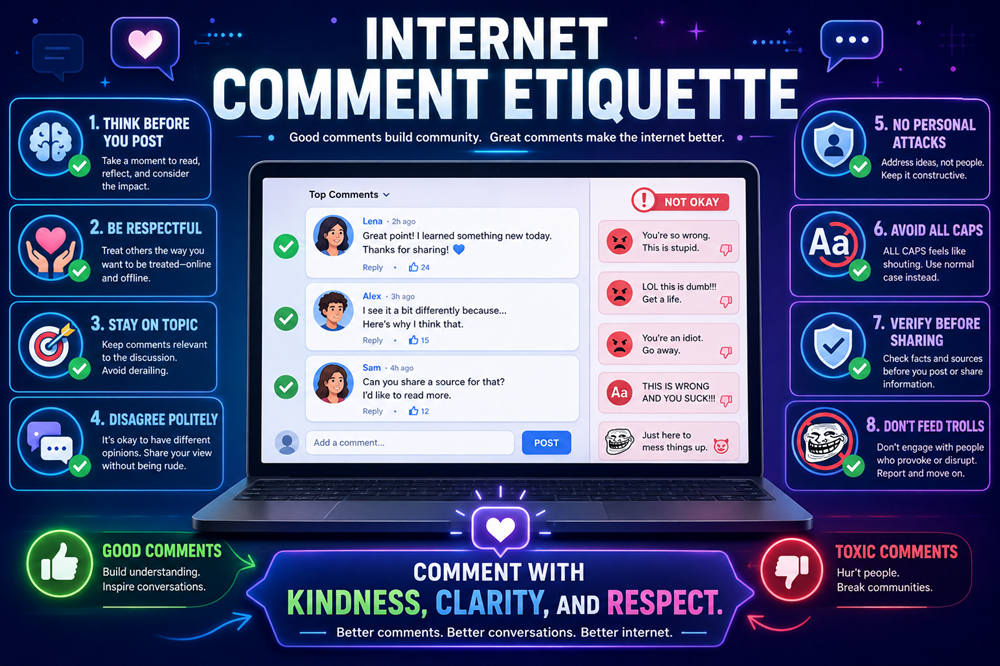
Internet comment etiquette is about knowing how to respond online without turning every reply into a fight. Whether you are commenting on a blog, video, forum, social post, or group thread, your words can shape the mood of the conversation.
Good commenting does not mean you have to agree with everyone. It means you share your thoughts clearly, avoid needless drama, and remember that real people are reading what you write.
What Is Internet Comment Etiquette?
Internet comment etiquette is the basic set of manners people use when they reply, debate, ask questions, or react online. The idea is not new. Early internet users even had formal netiquette guidelines for communicating in online spaces.
Today, it applies to comment sections, social media posts, online forums, group chats, Discord servers, Reddit threads, and community pages.
At its simplest, it means thinking before you post. Are you adding something useful? Are you responding to the actual topic? Are you treating the other person like someone worth hearing, even if you disagree?
You do not need to sound formal or overly careful. A good comment can be casual, funny, direct, or opinionated. The key is to avoid comments that are rude, misleading, invasive, or designed only to provoke a reaction.
Why Internet Comment Etiquette Matters
Comment sections can become helpful or hostile very quickly. One thoughtful reply can answer a question, clear up confusion, or make someone feel welcome. One careless comment can turn a simple discussion into an argument.
Your comments also affect how people see you. A short reply can make you look helpful, informed, petty, aggressive, or careless. That matters more than many people realize, especially when comments are public, searchable, or easy to screenshot.
Good etiquette also keeps online communities useful. When people feel safe asking questions or sharing opinions, the whole discussion improves. When every thread becomes a fight, people stop participating or leave the space completely.
Read Before You Reply
A lot of bad comments start with one simple mistake: reacting before reading.
Before you reply, read the full post, caption, article, or thread. Check whether the person already answered your question. Look at the context. Notice whether the post is serious, personal, sarcastic, educational, or meant for a specific group of people.
This helps you avoid arguing against something the person never said. It also keeps you from asking a question that was already answered or correcting someone based on a half-read sentence.
Reading first only takes a little extra time, but it makes your reply stronger. You are not just reacting. You are responding with context.
Keep Your Comments Clear and Respectful
A useful comment is easy to understand. You do not need long paragraphs, complicated language, or a dramatic tone. In many cases, a simple, direct reply works best.
Stay close to the topic. If the post is about internet safety, do not turn the thread into a completely different debate. If someone asks for help, answer the question instead of using the comment section to show off or attack others.
Respect also matters. You can be honest without being cruel. “I see this differently” keeps the door open. “Only an idiot would believe this” usually shuts the conversation down.
Before posting, read your comment once. Ask yourself whether it says what you actually mean. Online, people cannot hear your voice or see your expression, so unclear wording can easily sound harsher than intended.
Disagree Without Attacking People
Disagreement is normal online. You can challenge an idea, correct a mistake, or offer another point of view without turning the conversation personal.
The easiest way to do this is to focus on the point, not the person. Instead of writing, “You have no idea what you’re talking about,” try something like, “I disagree because there’s another factor to consider.”
That kind of reply gives people something to respond to. It also makes your comment look more credible.
Avoid mocking someone’s intelligence, grammar, appearance, background, or personal life. Those attacks do not strengthen your argument. They usually make you look less serious, even when your main point is right.
A strong disagreement should explain, question, or clarify. It should not humiliate.
Avoid Trolling, Baiting, and Piling On
Trolling means posting mainly to annoy, upset, or provoke people. Baiting works the same way. The goal is not a real conversation. The goal is a reaction.
These comments may get attention, but they rarely add value. They waste time, create stress, and make comment sections harder to use.
Piling on is another problem. This happens when many people attack the same person after a mistake, unpopular opinion, or awkward comment. Even platforms with clear rules, such as Reddit’s sitewide rules, separate debate from harassment because disagreement and targeted abuse are not the same thing.
Before replying, ask yourself whether your comment adds anything new. If ten people have already corrected someone, your reply may just add more pressure without helping the conversation.
Sometimes the better choice is to scroll past, report the comment, or leave the thread alone.
Think Before Using Sarcasm or Jokes
Humor is common online, but it does not always land the way you expect. Sarcasm is especially easy to misunderstand because readers cannot hear your tone.
A joke that sounds obvious to you may sound rude, dismissive, or confusing to someone else. This is even more likely in serious discussions, support groups, workplace communities, or conversations about sensitive topics.
That does not mean every comment has to be serious. Funny replies can make online spaces more enjoyable. The point is to read the room.
If a joke depends on embarrassing someone, mocking their pain, or making a tense thread worse, it may not be worth posting. As YouTube’s harassment and cyberbullying policies make clear, “I was joking” does not automatically make harmful behavior okay.
If your sarcasm could be mistaken for your real opinion, make it clearer or skip it.
Do Not Share Private Information
Privacy matters in every comment section. Never post someone’s private details just because you are angry, curious, or trying to prove a point.
This includes addresses, phone numbers, email addresses, workplaces, school names, private messages, family details, medical information, or anything that could help strangers identify or harass someone. The FTC’s online privacy and security advice is a useful reminder that personal information can be misused quickly once it is public.
Sharing private information can put someone at risk. It can also break platform rules and create serious consequences outside the comment section.
Be careful with your own details too. Public comments can reach more people than you expect. A quick reply may be saved, copied, searched, or shared later.
If a conversation requires private information, move it to a safer private channel or avoid sharing it at all.
Check Facts Before You Comment
Comment sections are one of the easiest places for false information to spread. People repeat claims quickly, especially when the topic is emotional, political, health-related, or tied to breaking news.
Before you make a strong claim, correct someone, or give advice, check that your information is accurate. This matters even more when your comment could affect someone’s money, safety, health, work, or legal choices.
You do not have to be an expert on everything. It is fine to say, “I’m not completely sure, but…” or “This may have changed, so it’s worth checking.” Resources from groups like Poynter can also help you think more carefully about rumors, hoaxes, and questionable viral claims.
When correcting someone else, keep it simple. “I think that information is outdated” usually works better than “Wrong.” People are more likely to listen when they do not feel attacked.
Use Emojis, Caps, and Punctuation Carefully
Small details can change the tone of a comment. All caps can look like shouting. Too many exclamation points can feel intense. A very short reply can seem cold, even if you meant it normally.
Emojis can help soften a message, but too many can distract from what you are trying to say. They can also mean different things depending on the platform, age group, or culture.
You do not need to analyze every symbol before posting. Just remember that online tone is easy to misread.
A few extra words can make a big difference. “Thanks, I appreciate it” feels warmer than “Thanks.” “I disagree, but I understand your point” feels calmer than “No.”
Respect Different Communities and Their Rules
Every online community has its own style. A joke that works on TikTok may not work in a professional LinkedIn thread. A blunt reply that feels normal on one forum may seem rude in a support group.
Before jumping into a new space, pay attention to how people talk to each other. Look for pinned posts, group rules, moderation notes, or community guidelines. Public projects such as Mozilla explain this through community participation guidelines, which help set expectations for respectful and constructive behavior.
Some spaces welcome debate. Others are built for advice, support, learning, or shared interests. Respecting that purpose helps you avoid looking careless or disruptive.
This is especially important in private groups, hobby forums, fandom spaces, educational communities, and support pages. People are often there for a specific reason, not to argue with strangers.
When you are new to a community, observe first. Then comment in a way that fits the space.
Know When Not to Comment
Not every post needs your opinion. Sometimes the smartest reply is no reply.
It is usually better to wait if you are angry, tired, embarrassed, or reacting only because something annoyed you. A comment written in the heat of the moment can create a problem that lasts much longer than the mood that caused it.
You also do not need to respond to obvious bait. Some people post extreme, rude, or dishonest comments because they want attention. Arguing with them may only reward the behavior.
If someone is harassing you, threatening others, spreading hate, or refusing to talk in good faith, blocking, muting, reporting, or leaving the thread may be the better option.
Walking away is not losing. Online, it is often just good judgment.
Quick Internet Comment Etiquette Checklist
Before you post a comment, ask yourself:
- Did I read the full post or thread?
- Am I responding to what was actually said?
- Is my comment clear?
- Does my tone match what I mean?
- Am I disagreeing with the idea instead of attacking the person?
- Did I check important facts before posting?
- Am I sharing anything private?
- Does this comment add something useful?
- Am I respecting the rules of this community?
- Would I be comfortable if this comment were screenshotted?
- Is this worth posting, or should I move on?
This quick check can help you avoid many common online mistakes. It also helps you comment with more confidence because you know your reply has a clear purpose.
Conclusion
Internet comment etiquette is not about being perfect, quiet, or agreeable. It is about pausing long enough to make sure your words are clear, fair, and worth posting.
You can still be funny, honest, direct, and opinionated. Just remember that a good comment should add something to the conversation, not make it harder for everyone else to be there.