
Cats feel like they were made for the internet. They are dramatic, unpredictable, expressive, and somehow able to turn the most ordinary moment into comedy.
The most famous internet cats did more than make people laugh for a few seconds. They shaped meme culture, helped define early YouTube humor, turned pet accounts into brands, and proved that one funny photo can travel around the world faster than almost anything else online.
Famous Internet Cats You Should Know
1. Grumpy Cat
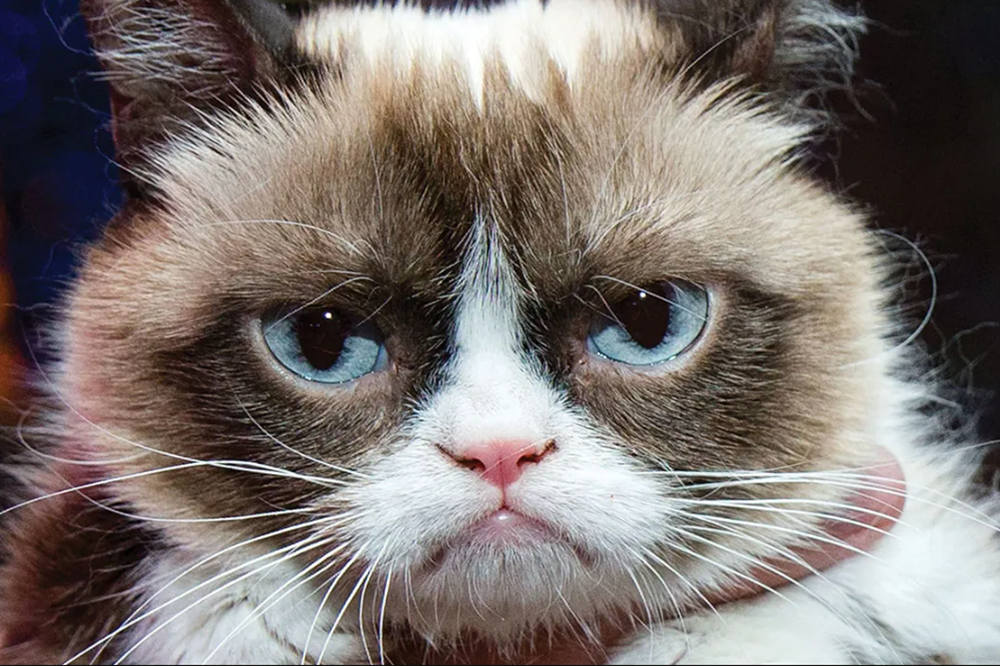
Grumpy Cat is one of the most recognizable animals in internet history. Her real name was Tardar Sauce, but the world knew her for her permanently unimpressed face.
Her expression looked like she had already judged the entire internet and found it disappointing. That made her perfect for sarcastic captions, bad-day jokes, Monday memes, and dry one-liners. A simple photo of Grumpy Cat could say what millions of people felt but did not want to type out.
Her rise began after photos of her spread online in 2012, and she quickly became a meme-world superstar. Sites like Know Your Meme helped document her popularity, while social media turned her face into shorthand for frustration, boredom, and deadpan humor.
Grumpy Cat’s fame also moved beyond the screen. She appeared in interviews, inspired merchandise, and became one of the clearest examples of how a viral pet could become a full media brand.
2. Keyboard Cat
Keyboard Cat belongs to the classic era of internet humor, when short, strange videos could become cultural landmarks almost overnight.
The original clip featured a cat named Fatso appearing to play a keyboard. Years later, the video became famous as the “Play Him Off, Keyboard Cat” meme. People used it after awkward fails, embarrassing moments, or scenes that needed a funny musical ending.
The joke was simple: something went wrong, and Keyboard Cat arrived to close the moment like a tiny feline lounge performer.
Part of the charm is that the video is clearly silly. It does not try too hard. It feels homemade, weird, and completely internet-native. That is exactly why it lasted. Keyboard Cat became a symbol of early YouTube’s playful, remix-heavy culture, where people could take one odd clip and turn it into thousands of jokes.
3. Nyan Cat
Nyan Cat is not a real cat, but no list of famous internet cats would feel complete without it. The animated meme shows a pixel-art cat with a Pop-Tart body flying through space while leaving a rainbow trail behind.
It sounds ridiculous because it is. That is also the point.
The original Nyan Cat video became a massive internet hit in 2011. It was bright, repetitive, catchy, and strange enough to stay in your head long after you watched it.
Nyan Cat worked because it did not need a deep explanation. You saw it once and understood the mood immediately: playful chaos. It became fan art, remixes, games, GIFs, and one of the most recognizable visual memes of the early 2010s.
Unlike Grumpy Cat or Smudge, Nyan Cat was not about reaction humor. It was pure digital nonsense, and that made it unforgettable.
4. Lil Bub
Lil Bub became famous because she looked unlike any other cat online. She had wide eyes, a small body, and a tongue that often stuck out, giving her a sweet and instantly recognizable appearance.
But Lil Bub’s fame was not only about how she looked. People connected with her story. She had several genetic conditions, yet her online presence felt joyful, gentle, and full of personality.
Her photos first spread through platforms like Tumblr and Reddit, then her fanbase grew into something much larger. She appeared in the documentary Lil Bub & Friendz and became closely connected with animal rescue and special-needs pet awareness.
Lil Bub showed a softer side of internet fame. She was funny and adorable, but she also made people care. Her popularity helped raise attention and support for animals that might otherwise be overlooked.
That emotional connection is why many fans remember her with real affection, not just as a meme.
5. Maru
Maru became famous for one of the simplest reasons possible: he loves boxes.
This Scottish Straight cat from Japan turned ordinary cardboard into internet entertainment. He climbed into boxes, slid into them, squeezed into them, and treated every container like a personal challenge.
His videos on the mugumogu YouTube channel became beloved because they were calm, funny, and oddly comforting. There were no loud gimmicks or forced reactions. Maru was just being Maru.
That quiet style made him stand out. His videos feel peaceful compared with much of the internet’s noisy content. You do not need drama, fast edits, or shocking behavior to enjoy them. You only need a curious cat and a box that is probably too small.
Maru’s fame explains why cat videos became such a lasting part of online culture. Sometimes people just want a few minutes of harmless joy.
6. Nala Cat
Nala Cat represents the modern pet influencer era. She is a Siamese-tabby mix with bright blue eyes, a sweet face, and a polished social media presence.
Her story also has a strong emotional hook because she was adopted from a shelter. That rescue background helped make her feel more personal to fans, not just pretty to look at.
Nala became especially famous on Instagram, where her account grew into one of the biggest pet pages in the world. Guinness World Records recognized her for having the most Instagram followers for a cat, which shows how far pet fame has moved beyond random memes.
Her rise is different from earlier internet cats. Grumpy Cat became famous largely through one unforgettable face. Keyboard Cat spread through remix culture. Nala grew through consistent posting, strong branding, and a loyal audience.
She shows how internet cat fame became more organized over time. A viral pet could now become a long-term social media personality.
7. Smudge the Cat
Smudge the Cat became famous through the “woman yelling at cat” meme, one of the most widely shared reaction images of the late 2010s.
The meme pairs a dramatic image of a woman yelling with Smudge sitting at a dinner table, looking confused and offended by a plate of vegetables. The contrast is what makes it work. One side looks emotional and intense. The other side is a cat who seems deeply unfairly accused.
Smudge’s expression is perfect because it can mean so many things. He looks shocked, defensive, annoyed, and innocent at the same time. That made the meme useful for arguments, misunderstandings, food complaints, family drama, bad opinions, and everyday online chaos.
The meme became so popular that Time covered its rise, showing how a single cat photo could turn into a global reaction format.
Smudge proves that internet fame does not always need a planned personality. Sometimes one perfectly timed expression is enough.
8. Pusheen
Pusheen is a fictional cat, but she has become one of the most recognizable cat characters on the internet.
Created by Claire Belton and Andrew Duff, Pusheen began as a webcomic character before growing into stickers, GIFs, plush toys, social media posts, and endless merchandise. Her round shape, soft expressions, and cozy habits made her easy to love.
Pusheen is different from many meme cats because she is not built around sarcasm or chaos. She is comfort content. She eats snacks, naps, dresses up, celebrates holidays, and makes everyday moods feel cute.
That is why Pusheen works so well in messages and comments. You can send a Pusheen GIF when you are tired, excited, hungry, cozy, or just trying to make a conversation feel warmer.
Her success shows that internet cats do not always need to be shocking or hilarious. Sometimes soft, friendly, and familiar is enough.
9. Henri Le Chat Noir
Henri Le Chat Noir brought a more dramatic style to internet cat humor.
His black-and-white videos were made to feel like serious art films, with Henri presented as a deeply bored, philosophical cat reflecting on life, food, loneliness, and the meaninglessness of existence.
The joke is that ordinary cat behavior becomes exaggerated into emotional suffering. A cat staring out the window is not just watching birds. He is trapped in a world that does not understand him.
That dry humor made Henri stand out from louder, faster meme formats. His videos appealed to viewers who enjoyed sarcasm, film references, and the idea that cats are secretly dramatic intellectuals.
Henri proved that internet cat comedy could be clever and slow-paced. It did not always need to be a quick reaction image or a chaotic video clip.
10. Simon’s Cat
Simon’s Cat is another animated internet cat that earned a lasting place in online culture.
Created by Simon Tofield, the character became famous through short animated videos showing a hungry, mischievous cat causing trouble for his owner. The first viral videos felt simple, but they captured cat behavior with surprising accuracy.
Anyone who has lived with a cat understands the humor. The staring. The pawing. The knocking things over. The dramatic demand for food even when food was clearly served five minutes ago.
That relatability helped Simon’s Cat become more than a one-time viral cartoon. The character grew into books, merchandise, and a long-running online series.
Simon’s Cat works because it turns everyday pet-owner frustration into something funny and affectionate. The cat is annoying, but in a way cat lovers instantly recognize.
Why Famous Internet Cats Go Viral
Famous internet cats usually have one clear hook.
Grumpy Cat had the face. Keyboard Cat had the punchline. Maru had boxes. Nyan Cat had the rainbow. Smudge had the reaction image. Pusheen had the cozy cartoon personality.
That hook matters because online attention moves quickly. People need to understand the joke or feeling almost instantly. Cats are perfect for that because their faces and body language are easy to project emotions onto.
A cat can look angry, guilty, confused, proud, dramatic, or deeply disappointed even when it is just sitting still. That gives people room to turn a normal pet moment into a relatable joke.
Cats also work well online because the content feels low-pressure. You do not need to follow a plot, know a celebrity, or understand a complicated trend. You can watch a cat jump into a box, stare at a vegetable, or “play” a keyboard and get the point right away.
The best cat content is usually simple. It makes you laugh, relax, or send it to someone with the message, “This is you.”
What Famous Internet Cats Reveal About Online Culture
Famous internet cats reveal how much people love shared, simple humor. A good cat meme gives everyone a tiny break from whatever they were doing.
They also show how the internet turns small moments into cultural symbols. A grumpy-looking cat became the face of sarcasm. A keyboard clip became a punchline for failure. A confused cat at a dinner table became a reaction image for online arguments.
These cats also remind us that not everything online has to be serious, polished, or deeply meaningful. Sometimes the most memorable content is funny because it feels natural.
There is comfort in that. Famous internet cats are familiar, easy to revisit, and still understandable years later. Even when platforms change, the humor holds up because the emotions are basic and human: annoyance, confusion, joy, laziness, hunger, drama, and curiosity.
How Internet Cat Fame Has Changed Over Time
Early internet cats often became famous through YouTube, Reddit, Tumblr, forums, and meme blogs. Their fame felt random and community-driven. People found a funny image or video, remixed it, shared it, and gave it new meaning.
Today, cat fame often grows through Instagram, TikTok, YouTube Shorts, and carefully managed pet accounts. The content may be more polished, but the appeal is still rooted in personality.
A modern internet cat might have a posting schedule, brand deals, product lines, and a recognizable visual style. That would have felt unusual in the early days of viral cat videos, but it makes sense now. Pets have become part of the creator economy.
Still, the best-known internet cats usually share the same basic quality: one unforgettable trait. It might be a face, a habit, a sound, a cartoon style, or one perfectly timed photo.
Without that clear identity, a cat may be cute, but it will not become iconic.
Are Famous Internet Cats Still Popular Today?
Yes, famous internet cats are still popular. The format has simply changed.
Instead of spreading only through image macros and old YouTube clips, cat content now moves through short videos, reaction posts, livestreams, stickers, memes, and pet influencer accounts.
Cats remain popular because they fit the internet so well. They are funny in short clips, expressive in photos, and comforting when people want something light. They can be chaotic, elegant, strange, lazy, dramatic, or adorable, often within the same minute.
Trends come and go, but cats keep finding new ways to take over the screen.
Whether it is Grumpy Cat’s legendary frown, Maru’s love of boxes, Pusheen’s cozy charm, or a new TikTok cat with one weird habit, the internet always seems ready for another feline star.