Internet of Things devices can make everyday life easier. You can check your front door from your phone, track your sleep, adjust the temperature before you get home, or ask a smart speaker for help.
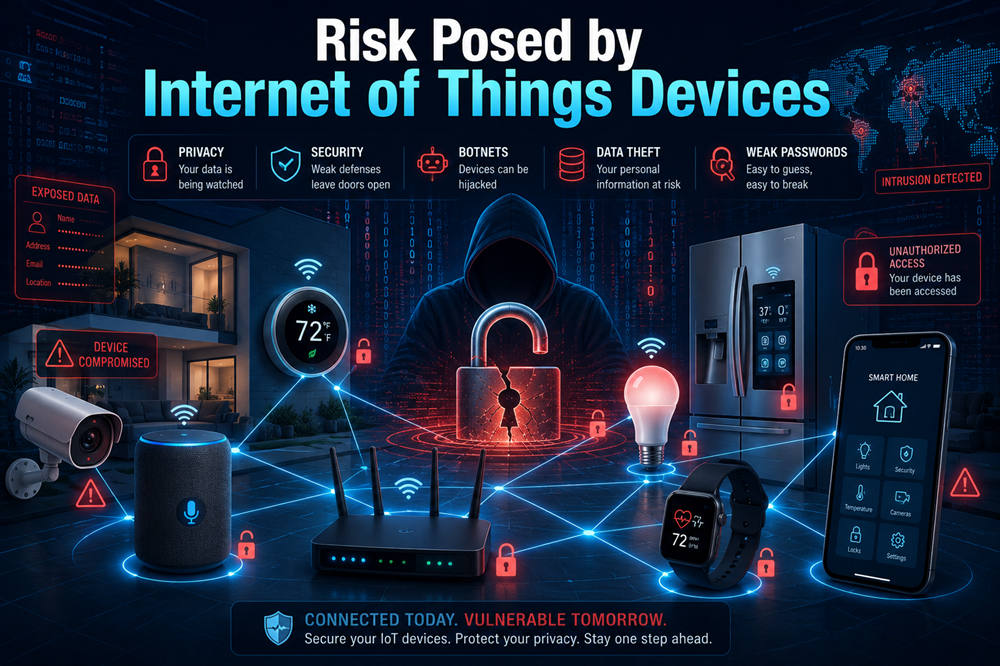
But every smart device you add also creates another possible point of access, data collection, or privacy exposure. The main risk posed by Internet of Things devices is that they can expose personal data, weaken your network security, and sometimes let attackers control connected systems.
What Are Internet of Things Devices?
Internet of Things, or IoT, refers to everyday devices that connect to the internet and share information. They are not traditional computers, but they still collect data, connect to apps, and communicate online.
Common IoT devices include smart TVs, speakers, cameras, video doorbells, smart locks, thermostats, fitness trackers, baby monitors, appliances, medical wearables, and industrial sensors.
The “smart” feature is usually what makes these products useful. A camera can send motion alerts. A thermostat can learn your schedule. A fitness tracker can monitor your activity. A speaker can respond to voice commands.
The risk comes from the same thing that makes them convenient: they are connected. If a device collects data or communicates through the internet, it needs proper security. For a broader look at connected-device concerns, CISA’s Internet of Things guidance explains why IoT products need careful security planning.
Why IoT Devices Can Be Risky
IoT devices can be risky because they often run quietly in the background after setup. You may remember to update your phone or laptop, but a smart plug, camera, speaker, or old router can be easier to forget.
Some devices also come with weak default settings, limited software support, or privacy controls that are hard to understand. If they are not secured properly, they can become weak spots in your home or business network.
Risk 1: Personal Data Can Be Collected or Exposed
One of the biggest IoT risks is privacy loss. Many smart devices collect personal information to do their jobs.
A fitness tracker may record your location, heart rate, sleep habits, and exercise activity. A smart speaker may process voice commands. A video doorbell may capture visitors, deliveries, and movement outside your home. A smart TV may track what you watch.
That information can be useful, but it can also be sensitive. The concern is not only hacking. Companies may store, analyze, or share data in ways users do not fully notice during setup.
Before using a device, ask what it collects, where the data is stored, whether you can delete it, and whether the device really needs that information. The FTC’s IoT security guidance is a helpful resource for understanding how connected-device companies should think about privacy and security.
Risk 2: Hackers Can Use IoT Devices to Access Your Network
A poorly secured IoT device can become a doorway into your Wi-Fi network. This matters because your smart devices may share a network with your phone, laptop, tablet, printer, and personal accounts.
A camera with a default password may be easier to break into. An outdated router may have known security flaws. A cheap baby monitor or smart plug may not receive regular updates.
Once attackers find one weak point, they may try to reach other devices on the same network. That is why smart gadgets should not be treated as harmless accessories. They are small internet-connected devices, and they need basic protection.
Changing default passwords, using strong unique passwords, and keeping device software updated can lower this risk.
Risk 3: IoT Devices Can Be Taken Over Remotely
Some IoT devices do more than collect information. They control things in your home, workplace, or daily routine.
A hacked camera may let someone view a live feed. A compromised smart lock could create a home security issue. A thermostat could be changed without permission. A connected alarm, appliance, or office system could be disrupted.
This is why IoT security can feel more serious than ordinary online security. A hacked account is already stressful, but a hacked device connected to your home, car, health, or workplace can affect your physical space too.
The more important the device’s job, the more carefully you should protect it.
Risk 4: IoT Devices Can Reveal Your Daily Habits
IoT devices can expose patterns about your life even if they never reveal your password or bank details.
A smart thermostat may show when your home is usually empty. A doorbell camera may reveal your daily schedule. A fitness tracker may show where you go and when you exercise. Smart locks, lights, and sensors can also show when people enter, leave, sleep, or move around the house.
These patterns may seem small on their own, but together they can create a detailed picture of your routine.
To reduce this risk, review privacy settings, limit location tracking, turn off features you do not use, and delete old recordings when possible.
Risk 5: Outdated Devices May Stop Receiving Security Updates
Many people keep IoT devices for years because they still work. But a working device is not always a secure device.
Manufacturers may stop supporting older products. Apps may stop getting updates. Firmware may no longer be patched. If a security flaw is discovered later, the device may stay vulnerable.
This is especially common with very cheap devices from unknown brands. They may work well at first but offer little long-term protection.
Before buying a smart device, check whether the company provides updates and clear security information. For devices you already own, look for firmware updates in the app or on the manufacturer’s website. If a device has not been updated in years, it may be safer to replace it or disconnect it.
Risk 6: IoT Devices Can Affect Physical Safety
IoT devices often connect digital systems to the physical world. That can be helpful, but it also raises the stakes.
Smart locks, smoke alarms, medical wearables, security systems, connected cars, and industrial sensors may affect access, alerts, health monitoring, or equipment performance.
In a home, that could involve cameras, locks, alarms, and appliances. In a hospital, it could involve patient data and connected medical tools. In a factory, sensors may help monitor machines or control important systems.
The risk is not that every device is dangerous. The risk is that important connected systems need stronger protection than people sometimes give them.
Risk 7: Businesses Face Bigger IoT Security Problems
IoT risk grows quickly in business settings. A home may have several connected devices, but a company may have hundreds or thousands.
Offices, schools, hospitals, stores, warehouses, and factories may use connected cameras, printers, badge readers, thermostats, lighting systems, smart displays, sensors, and industrial equipment.
The challenge is visibility. Not every device is always tracked. Employees may bring personal smart devices. Teams may buy connected tools without involving IT. Older systems may stay online long after support ends.
One weak device can create risk for the whole organization. Businesses need to know what is connected, who manages each device, what data it collects, and how often it receives updates. The NIST Cybersecurity for IoT Program offers useful guidance for organizations thinking more seriously about IoT security.
How to Reduce the Risks of IoT Devices
You do not have to avoid IoT devices completely. The safer approach is to choose them carefully and secure them from the start.
Change default passwords right away. Use strong, unique passwords for device apps and accounts. Turn on multi-factor authentication when available.
Keep devices updated. Check for firmware updates, turn on automatic updates if possible, and disconnect devices that no longer receive support.
Review privacy settings too. Turn off features you do not need, limit app permissions, and avoid giving devices access to more data than necessary.
You can also place IoT devices on a separate guest Wi-Fi network. This helps keep smart gadgets away from your main phones, computers, and work devices.
When buying new devices, choose trusted brands that explain their security and privacy practices clearly. A cheaper product may not be worth it if it lacks updates, support, or basic protection. The FCC’s U.S. Cyber Trust Mark is also worth knowing about because it is designed to help shoppers identify eligible smart products that meet cybersecurity standards.
Signs an IoT Device May Not Be Secure
A device may be risky if it still uses a default password, has not been updated in a long time, comes from an unknown brand, or has no clear privacy policy.
Be cautious if the app asks for permissions that do not make sense. A simple smart plug should not need access to your contacts, microphone, or photo library.
Also watch for devices with no multi-factor authentication, no update history, or no easy way to control stored data. These signs suggest the company may not be taking security seriously enough.
Should You Avoid Internet of Things Devices?
No, most people do not need to avoid Internet of Things devices. Many smart products are useful, convenient, and even protective.
A video doorbell can help you monitor packages. A smart thermostat can save energy. A fitness tracker can support better habits. A smart smoke alarm can alert you when you are away.
The key is to be selective. Before adding another device, ask whether it really needs to be connected, what data it collects, how it is protected, and whether the company provides updates.
Smart devices are not automatically unsafe, but they should not be treated like harmless decorations either.
Final Takeaway
The biggest risk posed by Internet of Things devices is that they can turn everyday objects into data collectors, network access points, and security weak spots.
That does not mean IoT devices are bad. It means they need care. A smart camera, speaker, lock, thermostat, or wearable is still an internet-connected device.
Choose smart devices carefully, secure them during setup, update them regularly, review privacy settings, and remove the ones you no longer use. That way, you can enjoy the convenience of IoT without taking unnecessary risks.