Internet access is now part of everyday school life. Students need it for homework, online classes, research, school portals, college applications, job searches, and messages from teachers.
Free internet for students does exist, but it is not always a simple “sign up and get Wi-Fi” situation. Some programs are fully free, while others offer hotspots, campus access, or discounts for eligible households.
What Free Internet for Students Really Means
Free internet for students can mean a few different things. It may be a school-issued hotspot, free Wi-Fi at a library or campus, a no-cost student program, or a discounted internet plan for eligible households.
Not every option is completely free, and not every student will qualify. Some programs are only for K–12 students, while others depend on income, location, or school resources.
Why Internet Access Matters for Students
Students need reliable internet to finish assignments, use learning platforms, check school portals, email teachers, research topics, and apply for college or jobs.
Without internet access, even simple school tasks can take longer than they should. A good connection helps students stay organized, keep up with deadlines, and avoid falling behind.
Best Ways to Get Free Internet for Students
1. Check School or District Hotspot Programs
For K–12 students, the school is usually the best first place to ask. Many districts help students who do not have reliable home internet by lending hotspots, laptops, tablets, or Chromebooks.
Parents or guardians can contact the school office, teacher, counselor, technology department, or student services team. A simple question is enough: “Does the school offer hotspot lending or internet assistance for students?”
If your school already provides devices for classwork, it may also have a process for helping students connect at home.
2. Use Library Hotspot Lending Programs
Public libraries are one of the most practical free internet options. Most libraries offer free Wi-Fi, computer access, study areas, and printing support.
Some libraries also lend mobile hotspots. You may need a library card, proof of address, or a parent or guardian’s approval if the student is under 18.
Hotspot rules vary by location. Some libraries lend them for a week, while others offer longer checkout periods or waitlists. Even if your library does not lend hotspots, it may still connect you with local internet help.
The FCC’s E-Rate program helps make internet service more affordable for eligible schools and libraries, which is one reason these places are often strong starting points for student access.
3. Apply for T-Mobile Project 10Million
T-Mobile Project 10Million is one of the clearest student-focused internet programs. It is designed for eligible K–12 student households that need help getting connected for school.
The program may provide a free hotspot and free mobile data for qualifying families. T-Mobile lists eligibility requirements on its official page, so it is worth checking the current details before applying.
This option can be helpful if your family does not have home broadband or if wired internet is too expensive in your area. Since it uses a mobile hotspot, speed and coverage depend on the T-Mobile network where you live.
4. Look Into Lifeline Internet Discounts
Lifeline is a federal program that helps qualifying low-income households lower the cost of phone, internet, or bundled service.
It is not always free internet, but it can reduce the monthly bill. A household may qualify based on income or participation in programs such as SNAP, Medicaid, Supplemental Security Income, Federal Public Housing Assistance, or certain veterans benefits.
Students usually do not qualify just because they are students. Eligibility is normally based on the household. That means a student may benefit if they live in a qualifying household.
This is especially important because the Affordable Connectivity Program ended in 2024. If you see a site claiming new ACP enrollment is still open, check carefully before sharing personal information.
5. Ask About College or Campus Internet Resources
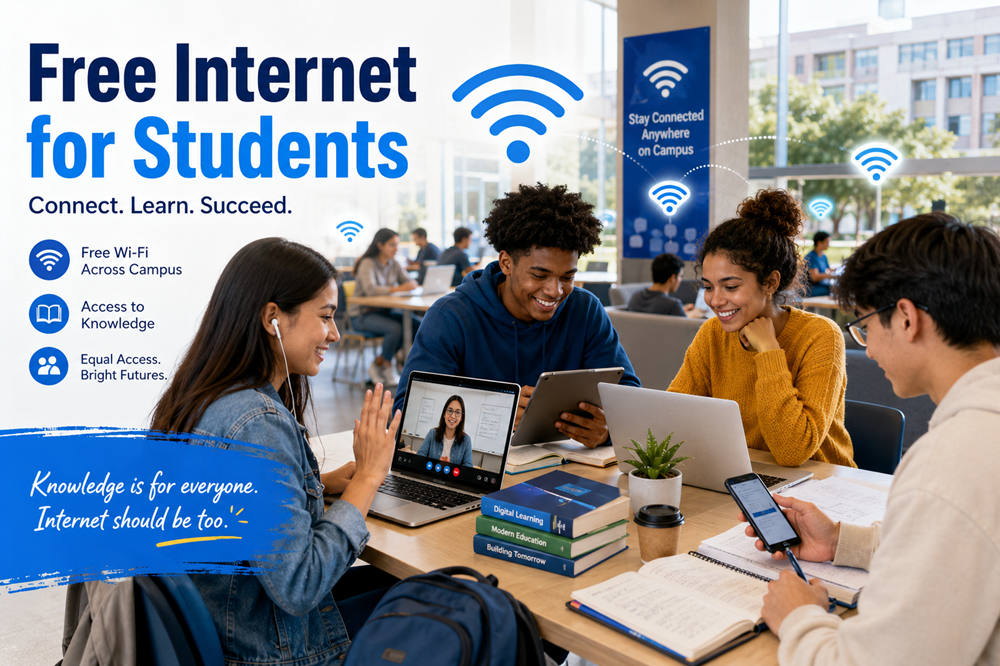
College students should check campus resources before paying for extra internet service. Many colleges offer free Wi-Fi in classrooms, libraries, residence halls, student centers, and computer labs.
Some schools also provide laptop checkout programs, emergency grants, technology loans, discounted software, or support funds for students facing financial stress.
Good places to ask include the campus IT desk, financial aid office, library, student affairs office, academic support center, or your advisor. Community colleges may also know about local programs for students who commute or study from home.
6. Compare Low-Income Internet Plans From Providers
Some internet companies offer low-cost plans for eligible households. These are not always advertised as student plans, but students can still benefit if their household qualifies.
Eligibility may depend on income, public assistance participation, school lunch status, or local program rules. Availability also depends on your address because providers serve different areas.
Before signing up, check the monthly price, installation fee, equipment cost, data limits, contract terms, speed, and whether the price changes after a promotion ends. A “cheap” plan is not helpful if hidden fees make it expensive later.
7. Search for Local Nonprofit and Community Programs
Many student internet options are local. Cities, nonprofits, churches, housing organizations, community centers, and digital inclusion groups sometimes offer free Wi-Fi locations, refurbished devices, hotspot lending, or help applying for discount programs.
Start with places that already support families in your area, such as public libraries, school family resource centers, city offices, after-school programs, housing authorities, and local nonprofits.
You can also search for “digital inclusion program” plus your city or county name. These programs often focus on students, job seekers, seniors, and low-income families who need better access to technology.
How Students Can Check Eligibility
Before applying for any free internet program, narrow down what fits your situation.
Ask yourself:
- Are you a K–12 student or a college student?
- Does your household receive SNAP, Medicaid, SSI, housing assistance, or similar benefits?
- Does your school lend hotspots or devices?
- Does your library offer hotspot lending?
- Are low-income internet plans available at your address?
- Do you need short-term access or long-term home internet?
- Do you also need a laptop or tablet?
Once you know the answers, you can avoid wasting time on programs that do not match your needs.
Documents You May Need to Apply
Different programs ask for different paperwork. Having basic documents ready can make the process easier.
You may need:
- Student ID
- Proof of school enrollment
- Parent or guardian information
- Proof of household income
- Proof of participation in SNAP, Medicaid, SSI, or another qualifying program
- Address verification
- Library card
- Photo ID for the adult applicant
For K–12 students, a parent or guardian usually needs to apply. College students may be able to apply on their own, depending on the program.
Only upload documents through official school, library, government, nonprofit, or provider websites. Avoid random forms that do not clearly show who is collecting your information.
Free Internet Options to Avoid
Not every “free internet” offer online is safe. Some websites use outdated program names, vague promises, or fake urgency to collect personal information.
Be careful with offers that claim “guaranteed free internet for everyone.” Real programs usually have clear eligibility rules.
Watch for these red flags:
- No official company, school, library, nonprofit, or government connection
- Requests for upfront payment
- Pressure to apply immediately
- No clear eligibility requirements
- Poor spelling or strange website design
- Claims that new ACP enrollment is still open
- No contact information
When in doubt, go directly to the official provider, school district, library, or government website instead of clicking random ads or search results.
Final Thoughts
Free internet for students is possible, but the right option depends on your school, location, age, and household eligibility. The safest places to begin are your school, public library, college campus, and official assistance programs.
For K–12 students, school hotspot programs and Project 10Million may be useful. For college students, campus Wi-Fi, computer labs, and student support offices are strong starting points. For low-income households, Lifeline and provider discount plans may help lower the monthly cost.
A quick call or email can make a real difference. Many students miss out on internet help simply because they do not know it is available.