SleepPhones are one of those gadgets that make more sense the moment you picture the problem. Regular headphones are awkward in bed. Earbuds can press into your ears. A speaker can bother the person next to you. SleepPhones solve that with a soft headband that plays private audio while you rest.
They are not the most futuristic sleep gadget in 2026, but the idea still feels useful. If you fall asleep to music, white noise, podcasts, audiobooks, meditation tracks, or sleep stories, SleepPhones may be a better fit than trying to sleep with normal earbuds.
Quick Verdict
SleepPhones are worth considering if you want comfortable bedtime audio without putting earbuds inside your ears. They are best for side sleepers, podcast listeners, audiobook fans, light sleepers who use masking sounds, and anyone who wants a softer way to listen in bed.
They are not the best choice if you need strong active noise cancellation, premium music quality, or total silence from loud snoring, traffic, or neighbors. Think of them as cozy sleep headphones, not a full noise-blocking sleep system.
What Are SleepPhones?
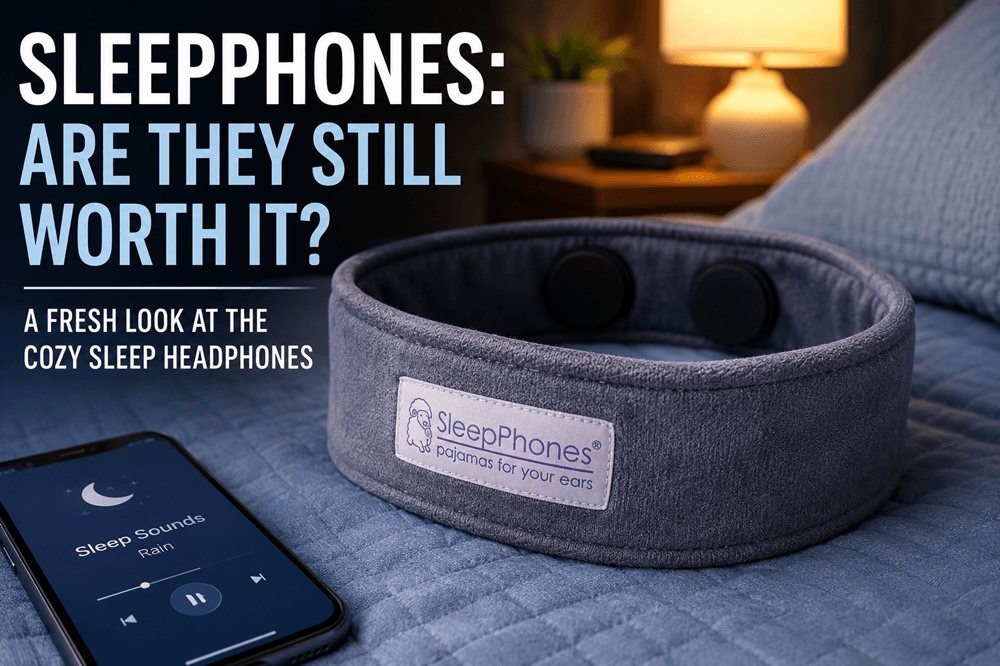
SleepPhones are headphones built into a soft fabric headband. Instead of using hard ear cups or in-ear buds, they place thin speakers inside the band. You wear it around your head, line the speakers up with your ears, and play audio from your phone or another device.
The current SleepPhones Wireless model uses Bluetooth, so there is no cord running through your bed. The official product page lists a 24-hour battery, removable speakers, built-in controls, and washable fabric once the electronics are removed. It also comes in different fabric options, including warmer fleece and lighter Breeze material.
The product has been around for a long time. SleepPhones came from AcousticSheep, a company founded by Dr. Wei-Shin Lai and Jason Wolfe. According to the company’s story, the idea started because Dr. Lai wanted a more comfortable way to listen to relaxing music at night after being woken by patient calls.
SleepPhones Wireless Specs at a Glance
| Feature | SleepPhones Wireless |
|---|---|
| Product type | Bluetooth sleep headphones built into a soft headband |
| Best use | Bedtime audio, travel, meditation, naps, and light noise masking |
| Battery life | Listed at up to 24 hours |
| Current listed price | $99.95 on the official SleepPhones shop at the time of review |
| Fabric choices | Fleece for warmth or Breeze fabric for a lighter feel |
| Washable? | Yes, after removing the speakers and Bluetooth module |
| Not ideal for | Strong noise cancellation, high-end music listening, or people who dislike headbands |
Why the Design Still Works
The best part of SleepPhones is the shape. A headband is simply easier to sleep in than most regular headphones. There are no bulky ear cups, and nothing sits deep inside your ear canal.
That matters most for side sleepers. Even small earbuds can become annoying when your ear is pressed against a pillow. SleepPhones spread the hardware across the band and use flat speakers instead. You can also move the speakers inside the fabric so they sit closer to your ears.
The headband design also makes SleepPhones easy to use for low-pressure listening. They work well for quiet playlists, rain sounds, brown noise, guided meditation, sleep podcasts, or an audiobook you do not mind drifting away from. This is not about chasing perfect sound. It is about making bedtime audio feel less irritating.
What SleepPhones Do Well
SleepPhones are strongest when comfort matters more than advanced features. The wireless model removes the most obvious problem with older sleep headphones: tangled cords. That alone makes the product feel more modern and easier to recommend.
The 24-hour listed battery life is another practical plus. Many bedtime gadgets become annoying when they need constant charging. A longer battery gives you more room for overnight use, travel, or several shorter sessions.
The washable band is also important. Anything worn on your head at night needs cleaning. Hair products, sweat, and skin oil build up quickly, so removable electronics are a must-have feature here.
The fabric choice is worth thinking about before buying. Fleece sounds cozy, but it may feel too warm for hot sleepers. Breeze fabric is the better pick if you want something lighter or live in a warmer climate.
Where SleepPhones Fall Short
SleepPhones are comfortable, but they are not magic. They do not offer the same kind of sound isolation you can get from fitted earbuds or active noise-canceling sleep buds. If you are trying to deal with loud snoring, heavy street noise, or thin apartment walls, SleepPhones may only soften the problem.
They also are not made for serious music listening. The speakers are thin because they have to be comfortable in bed. That tradeoff makes sense, but it limits how rich or detailed the audio can be. Podcasts, audiobooks, meditation tracks, and ambient sounds are a better fit than bass-heavy music.
Fit can also take a little adjusting. If the speakers are not placed correctly, the sound may feel uneven. You may need to move them around inside the band until they line up with your ears. That is not hard, but it is one more small step before sleep.
Are SleepPhones Safe to Sleep In?
SleepPhones are designed for bedtime use, but safe listening still matters. The biggest rule is simple: keep the volume low. You should be able to hear the audio without using it to overpower the room.
Cleveland Clinic notes that sleeping with earbuds or headphones can be okay for relaxation, but volume, fit, and device type matter. That advice applies here too. Use a soft volume, avoid pressure on your ears, and take a break if you wake up with soreness.
A sleep timer is also a smart habit. Many podcast, music, meditation, and audiobook apps let you stop audio after 15, 30, or 60 minutes. That gives you the relaxing part without playing sound all night.
You should also avoid blocking important sounds. If you need to hear alarms, children, pets, medical alerts, or emergency warnings, do not turn the volume up so high that the rest of the world disappears.
SleepPhones vs. Sleep Earbuds
The real comparison today is SleepPhones versus sleep earbuds. Both can help with bedtime audio, but they solve the problem differently.
Sleep earbuds are usually better if you want a smaller device, stronger noise masking, or app-connected features. Some models include active noise cancellation, built-in sound libraries, or sleep tracking. They may be a better choice for noisy rooms.
SleepPhones are better if you hate the feeling of earbuds in your ears. They are softer, easier to find in the bed, and less likely to create that plugged-up ear feeling. They also feel more natural if you mostly listen to gentle audio instead of trying to cancel the room.
The downside is that a headband is still something wrapped around your head. Some people will love that cozy feeling. Others will find it distracting. That comes down to personal sleep habits more than specs.
Better Alternatives to Consider
SleepPhones are a good fit for many bedtime listeners, but they are not the only option.
A small Bluetooth speaker may be better if you sleep alone or do not need private audio. It avoids ear pressure completely, though it can bother anyone sharing the room.
A white noise machine is better if you only want steady background sound. It is simple, screen-free, and does not require wearing anything.
Sleep earbuds are worth considering if noise blocking is your main concern. They may feel less comfortable for side sleeping, but some newer models are made specifically for nighttime use.
A Bluetooth sleep mask may be better if light is just as much of a problem as sound. Some models combine eye coverage with built-in speakers, though they can feel bulkier than a plain headband.
Who Should Buy SleepPhones?
SleepPhones make the most sense for people who already use audio as part of their sleep routine. If a podcast, audiobook, rain track, or calming playlist helps your brain slow down, the headband design can make that habit more comfortable.
They are also a strong option for side sleepers who keep getting annoyed by earbuds. The flat speaker design is not invisible, but it is easier to live with than a hard bud pressing into your ear.
They are less appealing if you want advanced tech. There is no big app ecosystem, no deep sleep tracking, and no serious active noise cancellation. That may actually be a plus if you want fewer sleep gadgets fighting for attention.
Final Take
SleepPhones still make sense because they solve a simple problem well. They let you listen in bed without wearing bulky headphones or pushing earbuds into your ears.
The wireless model is the best choice for most people because it removes the cord and offers enough battery life for overnight use. Choose fleece if you want warmth. Choose Breeze fabric if you sleep hot.
They are not perfect, and they are not the right tool for heavy noise blocking. But for comfortable bedtime audio, SleepPhones remain a clever little gadget with a surprisingly durable idea behind it.