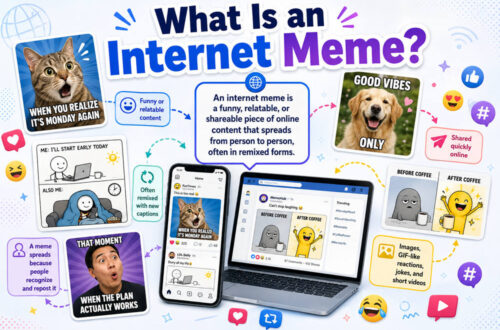
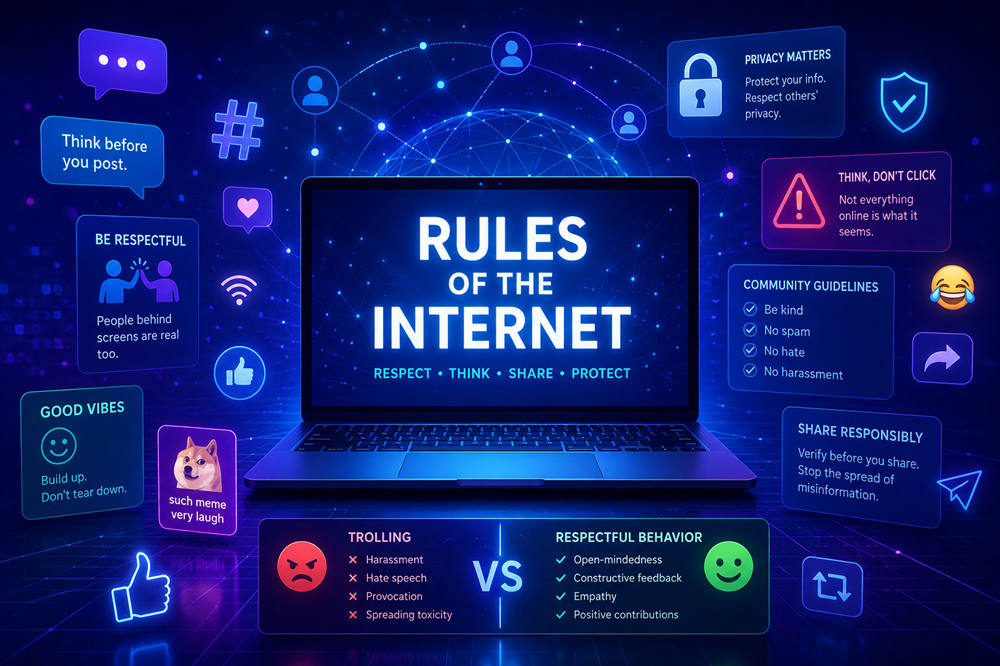
The rules of the internet are not real laws or official online guidelines. They are a loose collection of jokes, memes, warnings, and cultural observations that came from early internet communities.
Some are funny, some are crude, and some feel outdated today. Still, they remain part of internet history because they show how people tried to make sense of online behavior before social media became as polished and controlled as it is now.
What Are the Rules of the Internet?
The rules of the internet are an unofficial list of numbered sayings about what people do online. They look like a rulebook, but no government, tech company, or official internet authority created them.
There is also no single “correct” version. Different websites and communities have shared different lists over the years. Some include 50 rules. Others add more, change the wording, or leave certain rules out completely.
That messy format is part of the point. The rules work more like internet folklore than actual instructions. They describe patterns people noticed in forums, imageboards, fandom spaces, meme communities, and anonymous online groups.
Some rules talk about trolling. Others describe remix culture, fandom behavior, adult content, or absurd internet jokes. When someone mentions “Rule 34,” “Rule 63,” or the “rules of the internet,” they are usually referencing online culture, not a serious code of conduct.
Where Did the Rules of the Internet Come From?
The rules grew from early web spaces where anonymity, inside jokes, and meme-sharing shaped the culture. They are often connected to imageboards, forums, Anonymous-related communities, and wiki-style meme pages.
In those spaces, users developed their own language. A repeated joke could turn into shorthand. A common online pattern could become a numbered “rule.” The format made the ideas easy to copy, repost, and recognize.
Like many early internet memes, the rules do not have one clear creator. They spread through forum threads, screenshots, copied lists, and meme sites. Over time, users changed them, added to them, and turned certain rules into famous references.
That also explains why some original rules can feel harsh today. They came from online communities where shock humor, trolling, and boundary-pushing were common. You can understand the history without treating every part of it as something worth repeating.
Why the Rules Became Popular
The rules became popular because they gave people a simple way to explain messy online behavior.
A random post can become a meme. A joke can spread across platforms. A serious discussion can turn into a fight. A fictional character can be reimagined thousands of different ways. The rules turned those patterns into quick, memorable phrases.
The numbered format helped too. Calling something “Rule 34” or “Rule 63” made it sound like shared internet knowledge. Even if the “rule” was just a joke, the label made it easier to remember.
That is why some rules lasted. They worked as shorthand. Instead of explaining a long online pattern, users could mention one rule and expect others to understand the reference.
Are the Rules of the Internet Real Rules?
No. The rules of the internet are not real rules in a formal sense.
They are not laws. They are not website terms of service. They are not platform policies. They are not safety guidelines.
Real online rules include things like copyright law, privacy law, harassment policies, fraud rules, and cybercrime laws. Platforms also have their own terms of service and community guidelines that decide what users can post or how accounts can be moderated.
The meme-based rules of the internet are different. They are cultural references. They joke about, exaggerate, or describe online behavior.
So when someone says, “That’s one of the rules of the internet,” they usually mean it is a familiar online pattern, not something anyone is required to follow.
The Most Famous Rules of the Internet
There are many versions of the rules, but only a few became widely known outside the communities where they started.
Rule 1 and Rule 2
Rule 1 and Rule 2 are often linked to the idea that certain online communities should not be openly discussed. Their wording is commonly compared to the “do not talk about it” idea made famous by Fight Club.
In early anonymous internet culture, this worked as a joke about secrecy. Some communities liked feeling hidden from mainstream attention, so “don’t talk about it” became part of the identity.
The funny part is that the rule defeated itself. The more people repeated it, the more attention it brought to those communities. A rule about secrecy became famous because everyone kept sharing it.
Rule 34
Rule 34 is probably the best-known rule of the internet. It is also adult-themed, so it is best explained in a simple, non-graphic way.
The basic idea is that almost anything online can eventually be turned into adult content. Characters, franchises, celebrities, memes, and even random jokes can all be reworked in that direction.
The rule became famous because it points to something bigger about internet culture: people remix everything. Once something becomes recognizable, someone online will probably reinterpret it in a new, strange, funny, or inappropriate way.
Rule 34 is also a reminder that not every internet reference is meant for every audience. Some phrases may look like harmless meme language while pointing to adult topics.
Rule 63
Rule 63 is especially common in fandom spaces. It usually refers to the idea that many fictional characters have gender-swapped versions somewhere online.
This connects to fan art, cosplay, fanfiction, character redesigns, and alternate-universe storytelling. A hero might be reimagined as a heroine. A villain might be redesigned with a different gender presentation. An entire cast might be recreated in a new version.
Compared with Rule 34, Rule 63 is less about shock and more about creativity. It shows how fans do not just consume stories. They play with them, reshape them, and make them personal.
Rule 50 and “You Cannot Divide by Zero”
Some rules are more random than meaningful. Rule 50 is often linked with the old joke that you cannot divide by zero.
This kind of rule shows the absurd humor of the early internet. Not every rule was meant to explain serious behavior. Some existed because they sounded dramatic, strange, or funny.
The “divide by zero” joke treated a basic math error like a world-ending event. That exaggerated style fit perfectly into meme culture, where simple ideas often became over-the-top jokes.
Why Some Rules Are Controversial Today
The rules of the internet are interesting, but many came from spaces where offensive jokes and trolling were common.
Anonymity gave people room to be creative, but it also gave some users room to be cruel. Older meme communities often rewarded shock value, sarcasm, and boundary-pushing. Because of that, parts of the original lists can feel outdated, hostile, or inappropriate now.
That does not mean the rules should be ignored completely. They still help explain where many online references came from. But they make the most sense when viewed as a product of their time.
You can recognize their influence without treating every rule as funny, useful, or acceptable today.
What the Rules Say About Internet Culture
The rules reveal a lot about how online communities work.
They show that people remix everything. A character, phrase, image, or joke can turn into something completely different once the internet gets hold of it.
They show that anonymity changes behavior. Some people become funnier or more honest when hidden behind a username. Others become reckless or aggressive.
They also show how quickly jokes travel. A phrase can become famous long before most people understand where it came from.
Most of all, the rules show that online groups build their own language. Every community has shared references, private jokes, and unwritten expectations. The rules of the internet are one example of how those patterns become part of a larger culture.
Modern Internet Rules That Actually Matter
The old rules are mostly meme history, but modern internet life does need practical rules.
Think before posting. A comment, photo, or joke can be saved, shared, or taken out of context.
Protect your privacy. You do not need to share your location, workplace, schedule, family details, or personal information with strangers online. Digital privacy groups like the Electronic Frontier Foundation explain why personal data deserves more attention in everyday online life.
Do not feed trolls. Some people post only to provoke reactions. Arguing with them often gives them exactly what they want.
Assume screenshots can last forever. Even private messages can be copied or leaked.
Check sources before sharing. False information, scams, and suspicious links spread quickly when people react before they verify. The Federal Trade Commission offers practical advice on spotting phishing messages and avoiding online scams.
Respect each platform’s rules. Every online space has its own standards, and what works in one community may not work in another.
These modern rules are less edgy, but they are far more useful for everyday online life.
How to Understand the Rules Without Taking Them Too Seriously
The best way to read the rules of the internet is as a snapshot of early web culture.
They are part joke, part meme history, and part social commentary. Some describe real online patterns. Some are random. Some still make sense today, while others belong to an older version of the web.
You do not need to memorize the full list. You also should not treat it as a guide for how to act online.
The rules are useful because they show how early internet users talked about the web. They reveal what people found funny, annoying, shocking, or predictable. When someone mentions one today, they are usually using shorthand for a shared idea, not quoting an official rulebook.
Conclusion
The rules of the internet are not real rules, but they are a real part of online history. They came from communities shaped by anonymity, memes, trolling, fandom, and remix culture.
Some rules are funny. Some are strange. Some are adult or controversial. Most are best understood as products of their time.
What makes them worth knowing is simple: they capture how online culture works. People create inside jokes. Communities build their own language. Memes spread faster than explanations. And sometimes, a strange numbered rule becomes part of internet history.