
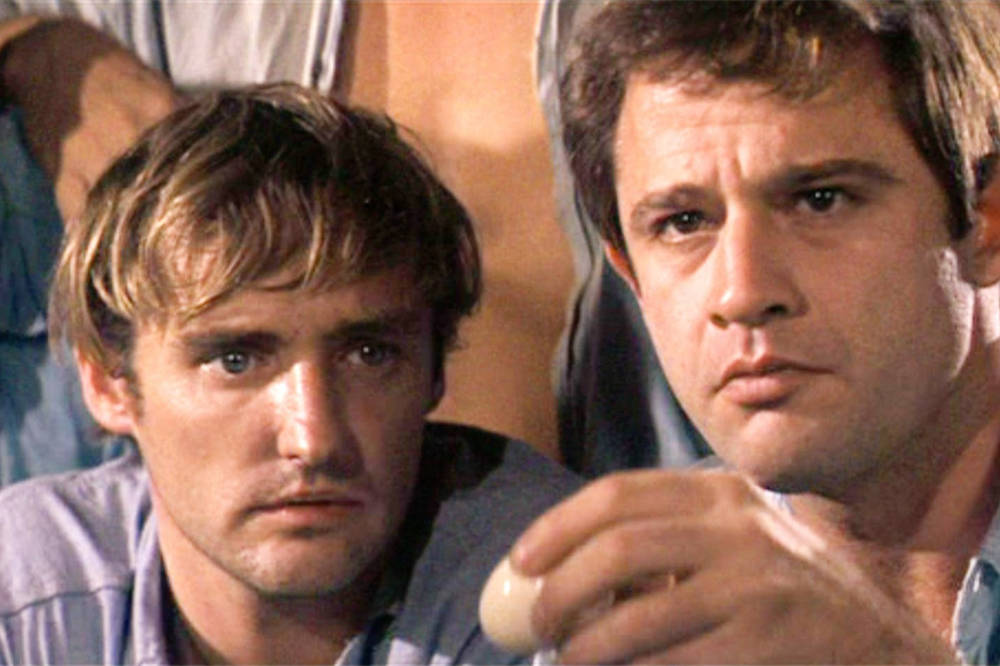
Yes, Dennis Hopper was in Cool Hand Luke. He played Babalugats, one of the prisoners in the film’s chain-gang ensemble. It is a supporting role, so viewers who remember the movie mainly for Paul Newman, George Kennedy, and Strother Martin may not notice Hopper right away.
Still, his appearance is worth a closer look. Cool Hand Luke came at an interesting point in Hopper’s career, after his early roles in the James Dean era and just before Easy Rider made him one of the defining rebel figures of late-1960s American cinema. His part as Babalugats is small, but it places him inside one of the most memorable prison-drama casts of the decade.
Who Did Dennis Hopper Play in Cool Hand Luke?
Dennis Hopper played Babalugats, one of the inmates at the prison camp where Luke Jackson is sent after being sentenced to hard labor. Babalugats is part of the prisoner group that works, watches, reacts, jokes, and suffers around Luke throughout the film.
The character does not drive the main plot. He is not Luke’s closest friend, main rival, or chief authority figure. That role belongs more clearly to characters such as Dragline, the Captain, and the guards who enforce the camp’s rules. Babalugats instead helps fill out the inmate world that gives the movie much of its texture.
That matters because Cool Hand Luke depends heavily on atmosphere. The prison camp feels hot, crowded, tense, and alive because the men around Luke are not faceless extras. They form a rough social world with its own pecking order, jokes, loyalties, and fears. Hopper’s Babalugats belongs to that world, adding one more recognizable face to the chain-gang community.
The Main Cast of Cool Hand Luke
Cool Hand Luke is led by Paul Newman as Luke Jackson, a quiet, stubborn prisoner whose refusal to submit makes him both a problem for the authorities and a symbol for the other inmates. George Kennedy plays Dragline, the powerful prisoner who first challenges Luke and later becomes one of his strongest admirers.
The supporting cast is one of the film’s strengths. The prison camp is filled with actors who bring personality to even brief appearances, which is part of why the movie still feels so vivid. A broader cast listing for Cool Hand Luke shows how many familiar names appear around Newman and Kennedy.
| Actor | Role |
|---|---|
| Paul Newman | Luke Jackson |
| George Kennedy | Dragline |
| Strother Martin | The Captain |
| J.D. Cannon | Society Red |
| Jo Van Fleet | Arletta |
| Morgan Woodward | Boss Godfrey |
| Dennis Hopper | Babalugats |
| Harry Dean Stanton | Tramp |
| Wayne Rogers | Gambler |
| Ralph Waite | Alibi |
| Anthony Zerbe | Dog Boy |
| Joe Don Baker | Fixer |
Seeing Dennis Hopper in this cast is especially interesting now because so many of these actors became familiar faces in American film and television. Hopper was not the central star of Cool Hand Luke, but his presence fits naturally into the movie’s restless group of prisoners.
How Babalugats Fits Into the Prison-Camp Ensemble
Babalugats works best as part of the ensemble. Cool Hand Luke is not only about one man fighting authority. It is also about how that resistance affects the men around him. Luke’s actions become important because the other prisoners see them, talk about them, and slowly begin to treat him as someone different.
At first, Luke is an outsider. He does not immediately fit into the prison camp’s social order, and his calm attitude puts him at odds with both the guards and some of the inmates. Over time, his stubbornness changes how the men see him. They watch him take punishment, keep working, refuse to give up, and turn small moments into tests of will.
That group response is where supporting prisoners such as Babalugats matter. They help show the camp as a living community instead of a simple backdrop. The inmates become the internal audience for Luke’s defiance. Their reactions help turn his behavior into a kind of legend inside the camp.
Hopper’s role contributes to that effect. Babalugats does not need a large speech or a separate storyline to be useful to the film. He is one of the men who make the prison camp feel crowded, watchful, and human. In a movie built around pressure and observation, that kind of presence matters.
Dennis Hopper Before Easy Rider
Dennis Hopper’s appearance in Cool Hand Luke came between two major phases of his career. Earlier, he had appeared in Rebel Without a Cause and Giant, both connected to James Dean’s short but influential film career. Those early Dennis Hopper film roles helped place him among a younger generation of actors associated with intensity, rebellion, and emotional directness.
By 1967, Hopper already had the image of a talented, unpredictable screen presence. That made him a natural fit for a film like Cool Hand Luke, even in a smaller part. The movie is full of men who push against rules, test authority, or survive by learning when to keep quiet. Hopper’s energy fits that setting without needing to dominate it.
Two years later, Hopper’s career changed dramatically with Easy Rider. He directed and starred in the 1969 film with Peter Fonda and Jack Nicholson, and the movie became closely tied to the counterculture mood of the late 1960s. After that, Hopper was no longer just a familiar supporting actor. He became a symbol of a rougher, freer, more rebellious kind of American filmmaking.
That is why his Cool Hand Luke appearance attracts attention today. Babalugats is not one of Hopper’s major roles, but the timing is interesting. The film catches him just before his public image grew much larger.
Why Dennis Hopper’s Small Role Still Gets Attention
Modern viewers often notice small roles differently once an actor becomes famous. A brief appearance that might have passed quietly in 1967 can stand out decades later because audiences know what came next. That is the case with Dennis Hopper in Cool Hand Luke.
For viewers discovering the movie through Paul Newman, Hopper’s name in the cast can be a surprise. For fans of Hopper, the role becomes another stop in the path from his 1950s work to his counterculture breakthrough. It also shows how deep the Cool Hand Luke ensemble was. Even the smaller prisoner roles were filled by actors with strong faces and distinct screen personalities.
The role also fits Hopper’s larger screen image. Many of his best-known performances involved outsiders, rebels, unstable personalities, or men who seemed uncomfortable inside ordinary rules. Babalugats is not written as a full version of that later Hopper persona, but the prison-camp setting makes his presence feel appropriate. He looks at home in a story about confinement, resistance, and men trying to hold onto some piece of themselves.
That is the real reason this cast detail keeps coming up. Hopper’s role is small, but it connects a classic Paul Newman film to a larger Hollywood career that would soon move in a very different direction.
Featured Image Source: imdb.com