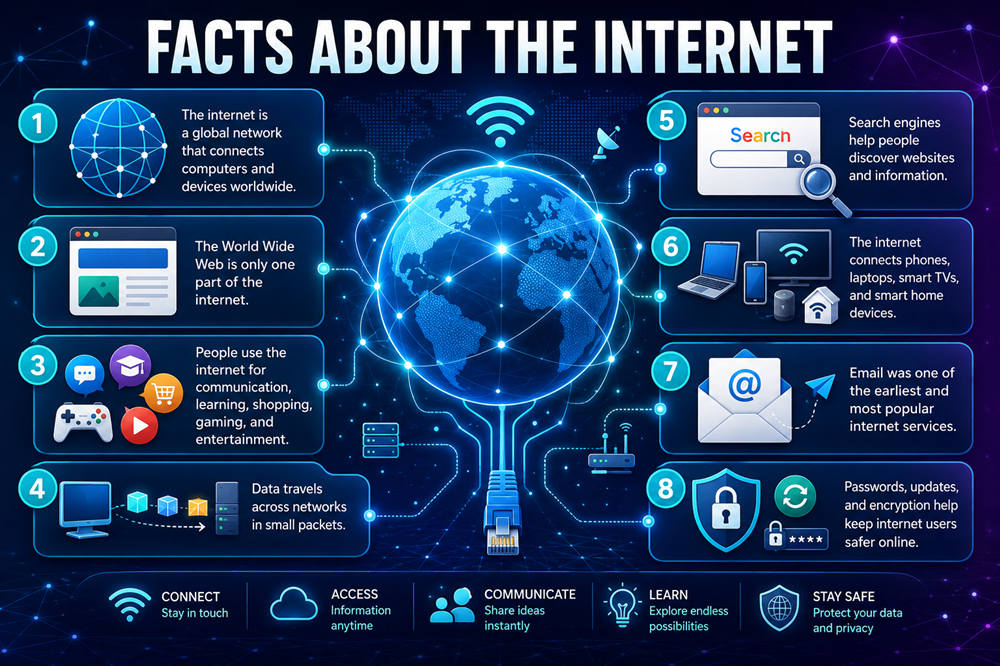
The internet is something you probably use every day, but it is easy to forget how much is happening behind the screen. Every search, message, video, payment, and website visit depends on a huge system of networks working together.
These facts about the internet show where it came from, how it works, and why it has become one of the most important inventions in modern life.
The Internet Began as a Research Project
The internet did not start as a place for social media, shopping, streaming, or online games. Its early roots go back to ARPANET, a research network created in the late 1960s.
ARPANET connected computers at universities and research centers so people could share information and computing power. At the time, computers were large, expensive, and difficult to connect. The idea that computers in different locations could “talk” to each other was a major breakthrough.
That early network helped shape the technology that eventually became the modern internet. What began as a small research tool later grew into a global system used by billions of people.
The First Internet Message Was Only Two Letters
One of the most famous internet history facts is the first ARPANET message.
On October 29, 1969, researchers tried to send the word “login” from UCLA to Stanford Research Institute. According to UCLA’s record of the first message sent over ARPANET, the system crashed after the first two letters, so the first message sent over the network was simply “LO.”
It was not perfect, but it was historic. That tiny failed message marked the beginning of computer-to-computer communication over a network that would eventually change the world.
Today, people send videos, photos, documents, voice notes, livestreams, and payments across the internet in seconds. But one of the earliest steps started with just two letters.
More Than Six Billion People Use the Internet
The internet is now one of the largest communication systems ever built. DataReportal reports that more than six billion people use the internet, which means most of the global population is online in some way.
People use the internet for school, work, banking, entertainment, maps, shopping, healthcare information, job applications, government services, and staying connected with family and friends.
Still, internet access is not equal everywhere. Some people have fast home broadband and unlimited mobile data. Others deal with slow service, high costs, shared devices, weak coverage, or no reliable connection at all.
That gap is called the digital divide, and it matters because internet access now affects education, employment, healthcare, and basic daily tasks. The International Telecommunication Union notes that billions of people are still affected by connectivity and affordability gaps.
The Internet and the World Wide Web Are Different
Many people use “internet” and “World Wide Web” as if they mean the same thing, but they are not identical.
The internet is the global network that connects devices, servers, routers, apps, and systems. The World Wide Web is one service that runs on top of the internet. When you open a website in a browser, you are using the web.
The web came later than the internet. CERN explains that Tim Berners-Lee invented the World Wide Web in 1989 as a way to help scientists share information more easily.
The internet also supports email, messaging apps, cloud storage, online games, video calls, file transfers, app notifications, and smart home devices.
A simple way to understand it: the internet is the road system, and the web is one type of traffic moving across it.
Email Was One of the Internet’s First Killer Features
Before websites became common, email was one of the most useful things people could do online. It made communication faster, cheaper, and easier across long distances.
Email proved that computer networks were not only helpful for researchers. They could also help people communicate in practical ways.
Even now, email remains a major part of internet life. You use it for receipts, account alerts, password resets, work messages, newsletters, customer service, school updates, and official documents.
Social media and messaging apps may feel more modern, but email is still one of the internet’s most important tools.
Domain Names Make the Internet Easier to Use
Websites are connected to numeric addresses called IP addresses. These addresses help computers find each other online.
The problem is that numbers are not easy for people to remember. That is why we use domain names. A domain name is the readable website address you type into a browser.
The Domain Name System, often called DNS, works like the internet’s address book. ICANN explains that DNS helps users navigate the internet by connecting readable domain names with the correct IP addresses.
Without DNS, using the web would be much harder. Instead of typing simple website names, you would need to remember long strings of numbers.
The Internet Is Not Really “In the Cloud”
“The cloud” sounds soft and invisible, but the internet depends on real machines in real places.
Your online data may be stored in data centers filled with servers. Your video call may travel through routers, fiber-optic cables, cell towers, satellites, and undersea cables. Your favorite app may depend on several systems working at the same time.
Undersea cables are especially important. They carry huge amounts of international internet traffic between continents. Even though satellites help in some situations, most global internet data still moves through physical cables.
So when people say something is saved “in the cloud,” it usually means it is stored on someone else’s server, not floating in the sky.
Wi-Fi and the Internet Are Not the Same Thing
Wi-Fi and the internet are often confused, but they are different.
Wi-Fi is a wireless connection between your device and a local network, usually through a router. The internet is the larger global network that connects that local network to the rest of the online world.
That is why your phone or laptop can show that it is connected to Wi-Fi but still have no internet access. In that case, your device is connected to the router, but the router may not be connected to the internet.
This is one of the simplest internet facts that helps explain a common everyday problem.
Websites Load Through Servers
When you open a website, your browser does not magically pull the page from nowhere. It sends a request to a server.
A server is a computer that stores or delivers website files. Those files can include text, images, videos, code, fonts, buttons, and layout instructions. Your browser receives those files and turns them into the page you see.
This process often happens very quickly. That speed can make the internet feel instant, but every page load depends on a chain of requests and responses.
If a server is slow, overloaded, or offline, the website may load slowly or not open at all.
Search Engines Do Not Search the Whole Internet Live
When you type something into a search engine, it does not search the entire live internet from scratch in that exact moment.
Instead, search engines build huge indexes of web pages. Google Search Central describes this process through crawling and indexing, where automated systems discover and organize pages before they appear in search results.
This is why some brand-new pages may not appear in search results right away. They usually need to be discovered and indexed first.
Search engines are powerful, but they do not know everything online. Some pages are private, blocked, deleted, hidden behind logins, or simply not indexed.
Mobile Internet Changed Daily Life
Smartphones changed the way people use the internet. Before mobile internet became common, many people went online mainly from desktop computers at home, school, work, or libraries.
Now, the internet is in your pocket. You can check directions, send money, compare prices, watch videos, answer messages, book appointments, read reviews, or work from almost anywhere.
For many people, especially in areas where home broadband is limited, a phone is the main way to get online.
This shift changed how websites and apps are designed. Pages need to load quickly, fit small screens, and work well with taps instead of mouse clicks.
Social Media Made the Internet More Personal
Social media changed the internet from a place people visited into something many people check throughout the day.
Instead of only searching for information, users started posting updates, sharing photos, joining groups, watching short videos, following creators, and reacting to trends in real time.
This made the internet more personal and interactive. It also gave individuals, small businesses, artists, and creators new ways to reach large audiences.
At the same time, social media brought new challenges. Misinformation, privacy concerns, online arguments, comparison culture, and screen-time issues are now part of the internet conversation.
Video Uses a Huge Share of Internet Traffic
Video is one of the biggest reasons people use the internet today. Streaming services, YouTube, TikTok, video calls, online classes, webinars, livestreams, and gaming content all depend on fast internet connections.
Video requires much more data than plain text or simple images. That is why weak connections can cause buffering, lower video quality, or dropped calls.
The rise of online video changed entertainment, education, marketing, fitness, news, and customer support. Many people now prefer watching a tutorial instead of reading instructions.
The internet is no longer mainly something you read. It is something you watch, hear, and experience.
Online Privacy Is a Major Internet Issue
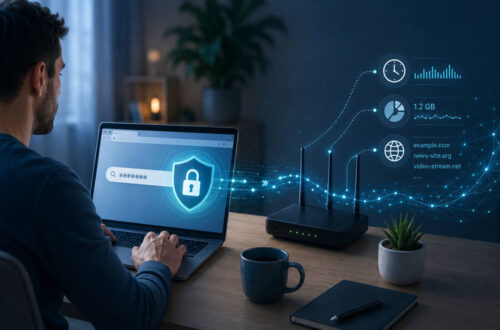
Every time you use the internet, you leave some kind of digital trail. Websites, apps, browsers, advertisers, and platforms may collect data about what you search, click, buy, watch, and share.
Some data collection is useful. It can keep you signed in, remember your preferences, recommend content, prevent fraud, or save items in your shopping cart.
The problem is that many people do not fully understand what is collected, how long it is stored, or who can access it.
That is why privacy settings matter. So do strong passwords, two-factor authentication, careful app permissions, and being cautious about what you share online. The Federal Trade Commission offers practical advice on protecting your privacy online.
Cybersecurity Is Part of Everyday Internet Use
Cybersecurity is not just a concern for large companies. It affects ordinary internet users every day.
Common online risks include phishing emails, fake websites, weak passwords, malware, hacked accounts, scam messages, and unsafe downloads.
Many scams work because they create pressure. A message may claim your account will be closed, your package is delayed, your payment failed, or you won a prize. The goal is to make you click before you think.
A safer habit is to slow down. Check the sender, look closely at links, avoid downloading unknown files, and do not share sensitive information through suspicious messages. The FTC’s guide on recognizing and avoiding phishing scams is a helpful place to learn the warning signs.
Artificial Intelligence Is Changing the Internet
Artificial intelligence is changing how people search, create, shop, learn, and communicate online.
AI helps power search tools, recommendation systems, spam filters, translation apps, chatbots, writing assistants, image generators, voice tools, and customer service systems.
This can make the internet more useful. You can summarize information, get writing help, compare ideas, create images, translate text, or find answers faster.
But AI also creates new problems. Fake images, deepfakes, inaccurate answers, copied content, and AI-generated misinformation can make it harder to know what is real.
As AI becomes more common, internet users need stronger judgment, not less.
Fun Facts About the Internet
Here are a few quick internet facts that are easy to remember:
- The internet is older than the World Wide Web. The web was created later as a way to browse linked pages.
- A website can load from servers located far away from you, sometimes in another state or country.
- Wi-Fi can work without internet access if it only connects devices on a local network.
- Search engines organize web pages in indexes before you search for them.
- Domain names exist because people remember words better than number-based IP addresses.
- The cloud is made of physical servers, not actual clouds.
- Undersea cables help carry internet data between continents.
- A slow website is not always caused by your device. The server, your connection, or the website itself may be the issue.
- Email is still one of the oldest and most widely used internet tools.
- The first ARPANET message was supposed to say “login,” but only “LO” was sent before the system crashed.
Why These Internet Facts Matter
The internet feels simple because we use it so often, but it is one of the most complex systems people have ever built. It connects billions of users, countless devices, millions of websites, and huge amounts of data.
Understanding how it works helps you use it more wisely. You can protect your privacy, avoid scams, understand common connection problems, and think more carefully about the information you see online.
The internet is not just a tool for entertainment. It shapes how people learn, work, communicate, shop, create, and solve problems. The more you understand it, the easier it is to use it safely and confidently.