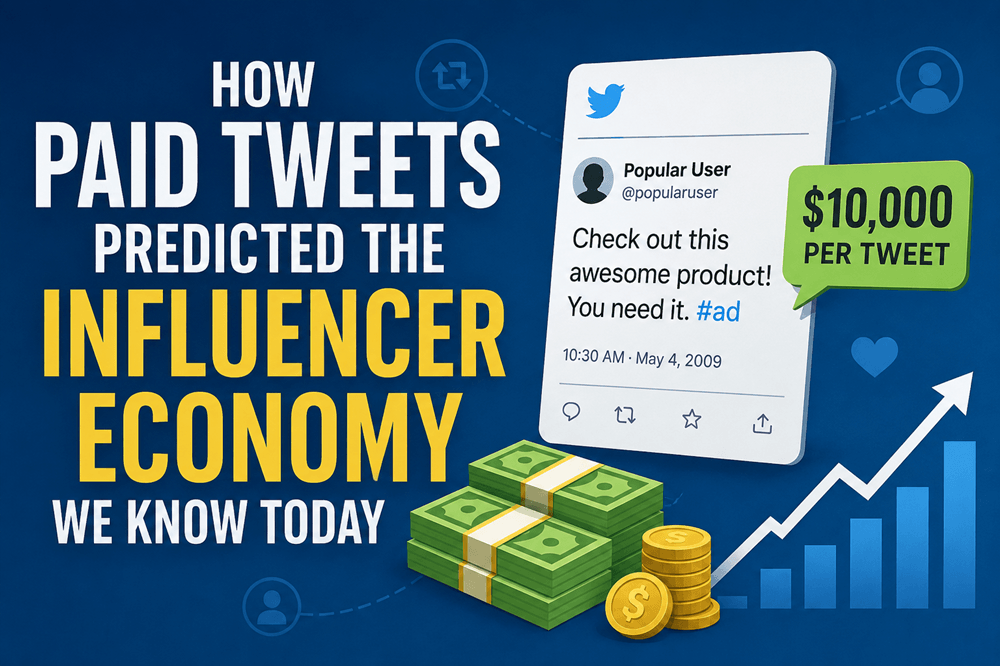
Paid tweets once sounded like a strange internet stunt. In the late 2000s, reports of celebrities earning thousands of dollars for a single Twitter post made social media monetization feel almost absurd. Today, those early sponsored tweets look like a preview of the creator economy.
Before sponsored Instagram posts, TikTok brand deals, affiliate codes, creator storefronts, newsletter sponsorships, and paid communities became normal, marketers were already asking a simple question: what is one person’s online attention worth?
Note: Twitter is now called X, but this article uses Twitter when discussing the platform’s early era.
Quick Take
Paid tweets were an early sign that social media accounts could become media properties. A popular Twitter user was not just someone posting jokes, links, and quick thoughts. They had reach, audience trust, and measurable value to advertisers.
The old “get paid $10K to tweet” idea was not a normal payout for everyday users. It was a headline-grabbing top-end figure tied to celebrities and large accounts. Still, the business model behind it was real: brands wanted access to personal audiences, and social platforms made that access feel direct.
Why Paid Tweets Felt So Weird in 2009
Twitter in 2009 still felt loose, fast, and personal. People used it for quick updates, jokes, celebrity posts, tech chatter, links, live reactions, and tiny pieces of everyday life. It had not yet become the massive news, politics, branding, and creator machine it later turned into.
That made paid tweets feel odd. A tweet looked casual. It came from a person, not a banner ad. It appeared beside real opinions, complaints, jokes, and conversations. When brands started paying people to post promotional messages there, the line between personal recommendation and advertising became blurry.
That blur was exactly what made the format powerful. A sponsored tweet could feel more natural than a traditional ad because it arrived through someone the audience had chosen to follow. It was not only an impression. It was a message wrapped in personality.
The Early Pay-Per-Tweet Boom
Companies like Ad.ly and SponsoredTweets helped turn Twitter attention into a marketplace. The idea was simple: match brands with popular Twitter users, pay those users to post sponsored messages, and track how those messages performed.
For celebrities and very large accounts, the numbers could get dramatic. TechCrunch reported in 2009 that Ad.ly was connecting advertisers with celebrity Twitter users, and that accounts with more than a million followers could command five-figure payments for a single tweet.
That is where the “$10K to tweet” headline energy came from. It was the perfect early social media story: a famous person, one short post, a huge check, and a public wondering whether the internet had officially gone off the rails.
But underneath the novelty was a serious shift. Brands were learning that social feeds could move attention quickly. Creators were learning that followers had monetary value. Agencies were learning how to package influence. Platforms were learning that advertising did not have to look like a rectangular ad box anymore.
What Paid Tweets Got Right
The early paid-tweet companies understood that distribution was changing.
In older media, brands bought space from publishers, TV networks, radio stations, magazines, and websites. Social media gave individual people their own audiences. A celebrity with millions of followers had direct reach. A blogger with a loyal niche community had direct reach. Even smaller accounts could matter if their followers trusted them.
Paid tweets also showed that follower count was only part of the equation. Marketers cared about engagement, topic fit, audience quality, and whether people were likely to click, share, or buy. That still matters today. A creator with a smaller but more engaged audience can be more useful than a giant account with weak trust.
That became one of the foundations of influencer marketing. The value is not just how many people see a post. It is whether the post feels relevant enough for people to act.
What Paid Tweets Got Wrong
The weak point was disclosure. If a popular account posted about a product, followers needed to know whether it was a real recommendation, a paid placement, or some mix of both.
Short labels like “ad” or “sponsored” were not always used clearly in the early days. Some disclosures were vague. Some were easy to miss. Some promotional posts sounded like personal opinions even when money was involved.
That problem did not stay on Twitter. It followed sponsored content to Instagram, YouTube, TikTok, podcasts, livestreams, newsletters, blogs, and affiliate marketing. The format changed, but the question stayed the same: can the audience easily tell when a brand relationship exists?
The Difference Between Sponsored Tweets and Platform Ads
Paid celebrity tweets were not the same thing as Twitter’s own promoted tweet ads. A paid celebrity tweet came from a person’s account because a brand paid that person or worked through a sponsorship network. A promoted tweet was platform-sold advertising placed through Twitter’s ad system.
Both pointed toward the same future: ads that looked more like normal posts than old banner placements.
That shift changed how advertising felt online. Instead of sitting around the content, ads increasingly became part of the feed itself. Sometimes that made them more useful. Sometimes it made them harder to spot. Either way, the feed became valuable real estate.
Why the Audience Reaction Was Complicated
Paid tweets bothered some users because they made social media feel less personal. People followed celebrities, bloggers, and internet personalities because they wanted a direct connection, or at least the feeling of one. A sponsored post interrupted that illusion.
At the same time, many users did not hate the idea of creators getting paid. The internet had already trained people to expect free content. If someone built an audience and found a way to earn from it, that did not automatically feel wrong.
The problem was not payment by itself. It was hidden payment. A clear ad can be judged fairly. A disguised ad feels sneaky. That distinction still separates the better parts of influencer marketing from the worst parts.
From Paid Tweets to the Creator Economy
Looking back, paid tweets were a rough draft of the creator economy.
Today, creators make money through brand deals, affiliate links, platform revenue shares, subscriptions, paid communities, digital products, courses, merch, livestream gifts, and direct fan support. A tweet is only one possible format. The bigger business is audience monetization.
The tools are also more advanced. Brands can track clicks, conversions, watch time, saves, comments, coupon codes, affiliate sales, audience demographics, and campaign lift. Creators can package themselves with media kits, rate cards, analytics screenshots, and case studies.
What used to sound shocking — someone got paid thousands to post online — is now a normal business category. The surprising part is how quickly casual posting turned professional.
What Changed After 2009?
The modern system is much larger than early paid tweets. Brand campaigns now move across TikTok, Instagram, YouTube, podcasts, newsletters, Twitch, Discord, Reddit, X, and creator websites.
Creators also have more ways to earn. A single campaign might include a short video, a story post, a discount code, an affiliate link, a pinned comment, a livestream mention, and a follow-up post. Some platforms also offer native creator marketplaces, revenue sharing, shopping tools, subscriptions, tips, or paid memberships.
The ads themselves have become more native too. A brand mention may appear inside a tutorial, review, comedy sketch, routine, unboxing, mini-documentary, or personal story. The promotion can be the entire piece of content, not just a line at the end.
That makes clear disclosure more important, not less. The more natural sponsored content feels, the easier it should be for readers and viewers to understand the relationship behind it.
Why Disclosure Still Matters
The Federal Trade Commission’s current influencer guidance says that material connections between advertisers and endorsers should be obvious to the audience. In plain English, if a creator is paid, gifted, sponsored, or otherwise connected to a brand in a way that could affect the recommendation, people should not have to guess.
Good disclosure does not need to be dramatic. It just needs to be easy to notice and easy to understand. “Ad,” “sponsored,” or a plain sentence explaining the brand relationship is stronger than vague tags or hidden notes.
This protects the audience, but it also protects the creator. Trust is the asset that makes sponsorships valuable in the first place. If followers feel tricked, the creator may earn a short-term payout but lose long-term credibility.
Why Twitter Was the Perfect Test Lab
Twitter was a natural place for this experiment because posts were short, public, fast, and easy to share. A sponsored message could be written quickly and spread quickly. If it worked, people clicked or retweeted. If it felt awkward, the backlash could arrive just as fast.
That speed made paid tweets useful and risky at the same time. Brands could test ideas fast, but they could also embarrass themselves fast. Creators could earn money, but one bad promotion could make their audience question every future recommendation.
The same tradeoff still defines sponsored content. A good brand deal fits the creator’s voice and audience. A bad one feels pasted on. People can usually tell when a post sounds like it was written by a committee.
Why the Old $10K Tweet Still Feels Important
The “get paid $10K to tweet” idea captured a moment when the internet was realizing that attention could be priced in a new way. It was not only about website traffic or banner ads anymore. A person’s social feed could become valuable media space.
That idea changed online culture. It encouraged creators to think like media companies. It pushed brands to treat individual personalities as advertising channels. It helped turn follower counts, engagement, and audience trust into business assets.
Not every result was positive. Sponsored content can be useful, entertaining, and honest. It can also be spammy, manipulative, or fake. But the shift was real, and paid tweets were one of the early signs.
Final Take
Paid tweets once looked like a weird side hustle for celebrities and popular internet users. Now they look like a preview of the creator economy.
The format has changed, but the central question is still with us: what happens when personal influence becomes paid media?
The best answer is not to pretend money is not involved. It is to make the relationship clear, keep the recommendation honest, and remember that the audience is not just a metric. It is the reason the post has value.